Most B2B leadership teams lack a real-time control metric for marketing traction.
They track revenue, bookings, and pipeline. These are great indicators that tell you what happened 60-90 days ago, not what’s happening now.
They watch marketing metrics like opens, clicks, form fills. Operational data that doesn’t connect to business outcomes.
What’s missing is a leading indicator that shows whether your market knows you exist, understands your value, and is moving closer to a buying decision.
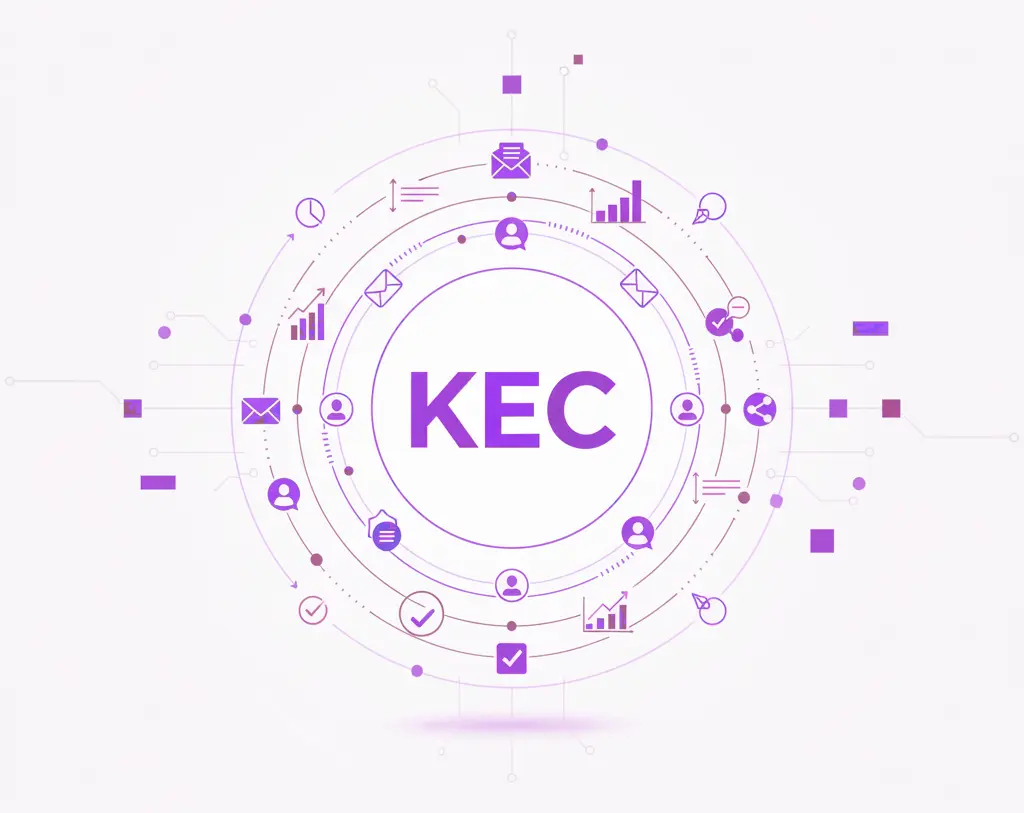
That metric is here, and it’s called Known Engaged Companies (KECs).
What Are Known Engaged Companies?
A Known Engaged Company (KEC) is an ideal customer profile account that is actively, measurably engaging with your business.
A KEC is:
- An account in your ICP
- Identified (not anonymous traffic)
- Actively engaging with your website, emails, or content
KECs are not random leads.
They’re companies that:
- Open and click your emails consistently
- Read your articles and reports
- Attend your webinars
- Come back more than once
In other words: they know who you are, understand the value you bring, and are moving closer to a real conversation, even if they have not “raised their hand” yet.
When you track KECs, you’re measuring market penetration in real time.
You’re measuring market traction.
Why KECs Matter for Leadership
KECs function as a control metric for business performance.
- They predict pipeline If your KEC count drops, you’ll see pipeline and booking declines 60-90 days later. If KECs rise consistently, you know awareness and demand are building before those contacts ever enter your CRM.
- They show the cost of pausing. Stop all marketing activity for a month, and your KEC count will decay sharply. Engagement compounds when you’re consistent; it evaporates when you pause. KECs make that visible.
- They connect marketing to revenue without the lag. Traditional metrics tell you what happened last quarter. KECs tell you what’s happening now and what’s likely to happen next quarter.
This is why KECs matter to leadership: they’re a management metric, not a marketing metric.
How KECs Fit Into Your Funnel
KECs don’t replace your existing lead management system. They sit above it as an early indicator.
The hierarchy looks like this:
KEC → MQL → SQL → Opportunity → Booking
- KEC: A company in your market that’s engaging with your content
- MQL: A contact at that company who’s signaled intent and meets qualification criteria
- SQL: A qualified contact sales has accepted for outreach
- Opportunity: An active deal in your pipeline
- Booking: Closed revenue
KECs show what’s working before a lead ever enters your CRM. They give you visibility into the top of your funnel—the part most systems don’t measure well.
Over time, you’ll develop your own KEC → MQL conversion rate, quantifying how market awareness translates into sales-ready pipeline.
One Simple, Universal Benchmark
You can (and should) keep tracking:
- Click-through rates
- Click-to-open rates
- Conversion rates for webinars, downloads, and reports
- Website behavior
- Deliverability and reputation health
But all of those roll up into one executive-level question:
“How many Known Engaged Companies are we creating and sustaining?”
That’s your universal benchmark.
It gives leadership, sales, marketing, finance, and operations a shared language:
- If KECs are rising, your market is warming
- If KECs are flat, your message is not landing
- If KECs drop, your visibility and deliverability are at risk
Everything else is diagnostic.
KECs are the scoreboard.
How Different Channels Feed KECs
Every channel has one job: create or deepen KECs.
|
Channel |
Purpose |
|
Website Analytics |
Track engagement by ICPs and identify new KECs for sales handoff |
|
Email Marketing |
Convert your list into engageable, active prospects and nurture ongoing engagement |
|
LinkedIn Ads + Retargeting |
Maintain consistent visibility, drive traffic back to your website, and educate through repetition |
|
Content Production |
Fuel campaigns, demonstrate expertise, and educate ideal customer profiles |
|
PR |
Build third-party credibility and sustained brand visibility |
|
Co-Branded Webinars |
Engage live audiences, deepen credibility, and create valuable follow-up opportunities |
|
Hosted Roundtables |
Facilitate intimate, curated discussions that build exclusivity and deeper engagement |
|
Conferences |
Extend visibility and foster in-person connections with ideal customer profiles |
Each activity is measured on its own terms, but judged on one outcome:
Did this help turn more of our ideal companies into Known Engaged Companies?
If not, change it or cut it.
The Compounding Effect of Consistency
Market engagement compounds over time.
Each week of consistent marketing activity adds incremental awareness. Each pause causes immediate decay.
Engagement works like a fire—it only burns while you feed it.
This is why KECs matter as a management metric: they make the value of sustained marketing investment visible.
When leadership asks “What happens if we cut marketing for a quarter?”, KECs give you the answer in real time, not six months later when pipeline dries up.
How to Actually Grow KECs
Growing KECs requires coordination across channels—content, ads, events, PR, and email all working together.
But there’s one channel that does the heavy lifting: email.
Email is where you build the list, deliver consistent value, and track engagement at the company level. Every other channel drives awareness and pulls prospects toward your owned audience.
To make this work, you need to rethink how you approach email entirely.
Most companies get it backwards. They optimize for the wrong metrics, ask for too much too soon, and wonder why their lists don’t convert.
Here’s what changes when you build for KECs instead of leads:
1. Start With Clean, Verified Data
Most lists start from sourced or purchased data. That’s the reality of B2B.
The problem is not where the data comes from, but what you do with it next.
99% of your deliverability problems come from 1% of your data.
Bad emails, spam traps, outdated contacts, and invalid addresses affect your sender reputation for everyone else on your list. This is why data hygiene isn’t optional.
Before any outreach:
- Verify every email address
- Enrich contact records with current information
- Remove obvious spam traps and role-based addresses
- Validate that contacts still work at their stated companies
B2B teams spend roughly 30 hours per week managing data hygiene. It’s complex, tedious, and absolutely critical.
The challenge isn’t sourcing the data, it’s operationalizing it correctly.
2. Use Tight Match List
Avoid broad audience expansion and pure ‘lookalike’ targeting. Use tight match lists tied directly to your ICP: specific industry, company size, role, geography.
Real success comes from building precise, verified audiences before outreach.
3. Permission Pass, Not Cold Blasts
B2B relationships don’t always start with form fills. Permission pass turns raw data into usable, compliant, high-value records.
- Send an intro email, explain who you are and the value you’ll send
- Make opt-out effortless
- Send from real people’s inboxes (capped volume, authenticated, warmed)
- Only keep those who choose to stay
No bait. No hidden sender. Documented, permission-based outreach at B2B scale.
4. Optimize for Engagement, Not Opens
Open rates tell you if someone glanced at your subject line. They don’t tell you if anyone cares about what’s inside.
What matters:
- Click-through rate
- Click-to-open rate (are you delivering on the subject line?)
- Conversions: registrations, downloads, replies with intent
- Depth of content consumption
You can trick someone into opening.
You cannot trick them into caring.
5. Brand-Led Email Outreach Before Sales Outreach
Bulk email is for teaching, not pitching.
- Use weekly value emails to educate your market
- Never ask for meetings in bulk sends
- When behavior shows intent (multiple clicks, repeat visits, high-value content consumed) move those contacts into one-to-one sales sequences (with your sales tools)
Brand first. Sales second.
That’s how you turn cold markets into warm opportunities without destroying your sender reputation.
6. Perpetual Drumbeat, Not Fragile Sequences
Stop building long “nurture flows” that break the moment reality changes.
Instead:
- Send 1-2 high-value, standalone emails each week
- Same days, same times
- Eache mail works independently. No one is “out of sequence”
- Remove non-engagers after 8–10 sends to protect list health
Simple. Sustainable. Compounding.
7. Grow and prune simultaneously
Every send should:
- Add new, verified, permission-passed contacts
- Remove people who never engage
A smaller, highly engaged list beats a bloated, silent one every time.
For deliverability, for reputation, for real results.
Operationalizing KEC Across the Business
KECs only matter if the whole company uses them.
Here’s how smart teams plug this framework into daily operations:
Marketing Plans campaigns around increasing total KECs, not just channel clicks. Prioritizes topics and formats that attract and retain ICP accounts.
Sales Gets a live list of engaged companies with context: what they read, clicked, and attended. Outreach starts warm and relevant.
Customer Success / Delivery Sees which customers are consuming thought leadership, signaling readiness for expansions, new services, or strategic conversations.
Finance Uses KEC growth as an early, low-cost indicator of future pipeline—proof that brand and content are building asset value, not just spend.
Leadership & Operations Use one question to make trade-offs: “Will this move our KEC number up?” If not, reconsider.
KECs turn “marketing activity” into a measurable business asset: an owned, engaged audience of companies that know you and are more likely to buy.
Where Outkeep Fits
Outkeep exists to make this model practical.
Phase 1 (Outkeep):
- Identify and verify ICP-matched prospects
- Run compliant, transparent permission passes from real inboxes
- Deliver consistent, value-led bulk email
- Track engagement at the company level
- Keep lists clean, warm, and inbox-safe
Phase 2 (Your sales tools):
- Take the most engaged contacts
- Run one-to-one outreach, book meetings, build pipeline
Outkeep is the bridge between cold outreach and true opt-in.
It helps you own your audience and measure progress with a metric that finally matches how B2B buying actually works.
The Shift
If you remember one thing, make it this:
Stop renting attention. Start counting Known Engaged Companies.
Build a system that:
- Gives leadership a real-time control metric for market traction
- Predicts pipeline before contacts enter your CRM
- Builds first-party intent signals you own
- Turns awareness into real, predictable revenue
That’s the framework.
While everyone else chases opens and rented reach, you’ll be building an owned audience that compounds in value every single week.