Most B2B marketing teams are running exactly one of two workstreams hard, and the failure mode is recognizable from across the room. Either the brand looks like a respected industry media outlet that never converts anyone, or the team is bouncing between events and campaigns with high spend, lumpy results, and a CAC nobody wants to defend at the next board meeting.
The two workstreams are awareness and consideration. Awareness is always-on, low-friction, broad: emails, newsletters, organic social, short-form content, paid digital, thought leader posts. Consideration is point-in-time, deeper, higher-stakes: research reports, dense point-of-view articles, webinars, speaking engagements, conference booths, drip sequences, sponsorships. Both are necessary. Neither carries the program alone.
The article below names what each workstream is, what goes wrong when teams run one and not the other, and how to rebalance once the diagnosis is clear.
TL;DR
- Awareness is always-on and broad. Consideration is point-in-time and deep. Both are mandatory.
- Awareness without consideration produces a brand that looks like a media company. Followers, impressions, and shares climb. Inbound leads don’t.
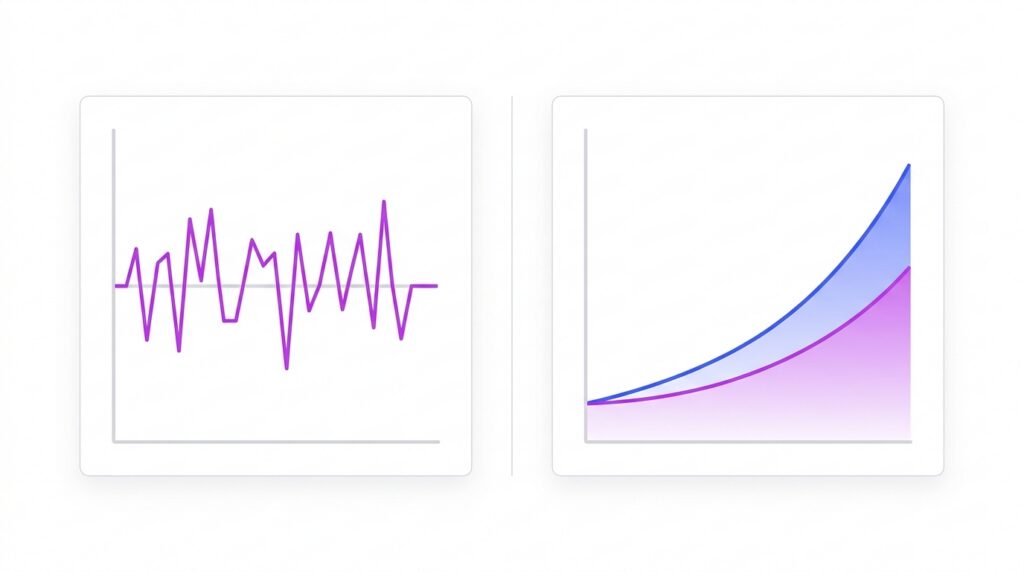
- Consideration without awareness produces a doom loop. Events and campaigns spike, prospects forget you between activations, and the funnel resets every cycle.
- 50/50 is a reasonable starting split. Early-stage companies often need to skew 80/20 toward awareness while building brand recognition.
- Creating an article isn’t awareness. Awareness requires promotion: email, ads, organic social, newsletter, amplification.
- The right balance requires the right team. Awareness, GTM engineering, and event ops are distinct skill sets and need distinct seats.
Core framework
Two workstreams. One program.
Both are necessary. Neither carries the program by itself.
Always-on layer
Awareness
Keeps the brand present during the long anonymous research window. Low-friction, broad, continuous.
Examples
Point-in-time layer
Consideration
Gives an in-market prospect a path to raise their hand. Higher-friction, deeper, point-in-time.
Examples
Skip awareness and the seller is starting cold every cycle. Skip consideration and the in-market prospect has nowhere to land.
1. The Two Workstreams, Defined
Awareness keeps the fire warm. Consideration is the fireworks show.
Why it matters
Awareness makes a prospect recognize your name, understand the problem you solve, and trust your point of view before they are in market. Consideration gives an in-market prospect a way to raise their hand: book the webinar, visit the booth, reply to the drip, request the demo. Both are necessary because B2B buyers spend roughly 151 days anonymous before they ever identify themselves. Show up only at the consideration moment and the seller is starting cold every time. Show up only at the awareness layer and the in-market prospect never has a path to convert.
How to use it operationally
- Run awareness as always-on surface area: newsletter, email program, organic social, short-form content, thought leader posts, paid digital, SEO, Reddit ads, LinkedIn boosts.
- Run consideration as point-in-time, higher-friction moments: annual research report, dense point-of-view articles, webinars, in-person events, sponsored webinars, drip sequences, speaking engagements.
- Stamp every consideration moment with a clear next step. The webinar registration, the booth conversation, the report download, the speaker session all need a defined handoff.
- Treat the two as one program. Awareness should feed the audiences consideration is converting, and consideration should generate signals that feed awareness retargeting.
Watch-outs
- Channel labels lie. A blog post sitting on the site with no distribution is not running as awareness. An event where nobody in-market shows up is not running as consideration.
- Awareness work that lives only on the brand’s own properties is the easiest place to overestimate reach. If it isn’t being distributed by email, ads, or organic social, it isn’t running.
- The two workstreams should be paired against the same accounts and segments. If awareness is hitting one ICP and consideration is targeting another, you are running two separate programs, not one.
2. The Failure Modes
Run one without the other and you produce one of two recognizable patterns.
Why it matters
The failure modes are diagnostic. The team’s metrics, budget mix, and stress level give it away. Awareness-only teams look like the marketing department of a respected publication: high open rates, healthy follower growth, plenty of engagement, and a sales team wondering why nothing inbound is showing up. Consideration-only teams look like a treadmill: 90% of the budget on events, a handful of good conversations per show, and a funnel that resets the day after every conference closes.
How to use it operationally
- Audit the budget split first. If 90% of marketing is going to events, sponsorships, and paid acquisition, the program is consideration-heavy.
- Audit the metric mix next. If the reported numbers are followers, impressions, visitors, opens, and shares, and inbound leads are flat or missing, the program is awareness-heavy.
- For consideration-heavy teams, do the math on the last event. A 2,000-person conference that produces 200 badge scans and 10 real conversations is a 0.5% to 1% hit rate. The other 1,990 people need an awareness layer to remember the brand by Q3.
- For awareness-heavy teams, audit the conversion paths. Identify how a newsletter reader or thought leader follower can take a next step. If there is no webinar, report, demo path, or booth, an in-market prospect has nowhere to land.
Watch-outs
- Vanity metric momentum hides the problem. Followers, impressions, and visitors can grow while the business problem gets worse. The marketer running that program is at the highest burnout risk, because the dashboard says success and the pipeline says nothing.
- Consideration-only teams often blame the channel mix instead of the structural gap. The next event won’t fix it. The next agency won’t fix it. The old rule was 7 touches, then 12, and current estimates put it closer to 32. One conference per quarter does not cover that.
- A consideration-heavy program with one good year is the most dangerous version of this. The lumpiness stays hidden until it isn’t.
3. Rebalancing Without Breaking Either Side
Budget split by stage
How the mix shifts with company maturity.
Starting splits by stage. Numbers move with pipeline math, the principle holds: one workstream without the other rarely wins.
Build recognition first
No audience yet for consideration moments to convert. Tilt hard toward awareness.
Compound on a known audience
Recognition is in place. Run both layers in parallel so each one feeds the other.
Tilt by pipeline math
Adjust as the program demands, rarely past 60/40 in either direction.
The fix is rarely a hard 50/50 split, but 50/50 is a reasonable place to start.
Why it matters
The right balance depends on stage, budget, and how anonymous the buyer is. An early-stage company with no brand recognition may need 80% of the program pointed at awareness for the first year, because there is no audience yet for consideration moments to convert. A growth-stage company with traction can move toward 50/50. A mature company tilts by pipeline math, rarely past 60/40 in either direction. The principle holds: one workstream without the other almost never wins.
How to use it operationally
- Set a baseline split tied to maturity. Early-stage: roughly 80/20 awareness-leaning while the brand builds recognition. Growth stage: shift toward 50/50. Mature: tilt by pipeline math, rarely past 60/40 either way.
- Test the awareness channels in parallel rather than sequentially. Newsletter, paid social, thought leader content, SEO, and Reddit ads will not all hit. Run them, measure them, and double down where the engagement is real.
- Treat promotion as a deliverable, not a hope. Every awareness asset gets an email push, an organic post, a paid distribution plan, and a thought leader amplification. If those don’t exist, the asset isn’t running.
- Staff for both workstreams. Awareness, GTM engineering, event ops, webinar production, and sponsorships are distinct skill sets. Right person, right seat. A team built only for one will produce only one.
Watch-outs
- Don’t pull from awareness to fund a short-term consideration push. The compounding is the point, and stripping the always-on layer to chase one event quarter is how teams end up back in the doom loop.
- Don’t confuse channel volume with awareness depth. Four blogs a month with no distribution is not an awareness program. Two pieces a month with email, paid, and thought leader amplification often is.
- Don’t expect rebalancing to show up in one quarter. Awareness compounds. The lift is visible in 2-3 quarters, and pulling the program early resets the cycle.
Context on Outkeep’s Approach
Outkeep runs email programs for B2B teams whose buyers spend long stretches anonymous before they ever raise a hand. That puts us deep inside the awareness layer of programs whose consideration motion typically lives somewhere else: events, content, paid, sponsorships. We see the seam between the two workstreams from both sides.
The pattern in this article is the one we see across most of those programs. The teams getting compounding results have both workstreams running, paired against the same audience, with the awareness layer doing the patient work of keeping the brand present between activations. The teams that are stuck almost always have one workstream doing all the work, and they recognize themselves the moment the failure mode is named.
FAQ for Modern B2B Email Programs
What is the difference between awareness and consideration in B2B marketing?
Awareness is always-on, low-friction surface area like newsletters, ads, organic social, and short-form content. Consideration is point-in-time, higher-friction moments like webinars, research reports, events, dense point-of-view articles, and drip sequences. Awareness builds recognition and trust before a prospect is in market. Consideration gives an in-market prospect a way to raise their hand.
How can I tell which workstream is missing from my marketing program?
Look at the metrics that are growing and the metrics that are flat. If followers, impressions, opens, and shares are climbing but inbound leads are flat, the program is awareness-heavy. If event ROI is lumpy, CAC is high, and the funnel resets after every campaign, the program is consideration-heavy.
Can I fix this by just spending more on events?
No. Adding more events to a consideration-heavy program deepens the doom loop. Every event captures a small subset of the in-market audience, and the prospects who didn’t engage forget the brand between activations. Awareness has to run between events for the events to compound.
What is a reasonable starting budget split between awareness and consideration?
50/50 is a reasonable default. Early-stage companies with little brand recognition often need to skew closer to 80/20 toward awareness for the first year. Mature companies can sit at 60/40 in either direction depending on pipeline math. One workstream alone rarely wins.
Does posting an article count as awareness?
Only if it gets distributed. Awareness requires promotion: email, paid, organic social, thought leader amplification, newsletter inclusion. An article published to the blog with no distribution plan is not running.
How does team staffing affect the balance?
Awareness, GTM engineering, event production, and sponsorship management are distinct skill sets. A team built around one workstream will produce only one workstream. Right person, right seat applies here, and rebalancing the budget usually requires rebalancing the team.