Email is still the highest-ROI channel in B2B. Most teams just stopped treating it that way.
George Linville, co-founder and CEO of Outkeep, joined Brian Lofermento on the Wantrepreneur to Entrepreneur podcast to talk about why the channel is harder than ever, why that’s actually good news for teams willing to do it right, and what a modern email program looks like when it’s built to last.
We pulled the five themes that stuck. The full conversation is at the bottom if you want to go deeper.
Why does everyone keep saying email is dead?
The “email is dead” narrative shows up every few years for the same reason every time: an inbox provider changes something, teams don’t adapt, performance drops, and people blame the channel instead of their approach.
In 2005 you could send 100,000 emails and not worry much about delivery. Today, between AI-generated noise, bots, and inbox providers constantly updating their filtering criteria, making a real impression takes real effort. That difficulty is also what makes the channel valuable. On social and paid, you rent reach. With email, you own it. The teams that take that seriously, and do the work to earn it, have access to something most of their competitors have quietly given up on.

The algorithm shifted. The channel didn’t die. There’s a meaningful difference between those two things.
You keep calling email an algorithm. What does that actually mean?
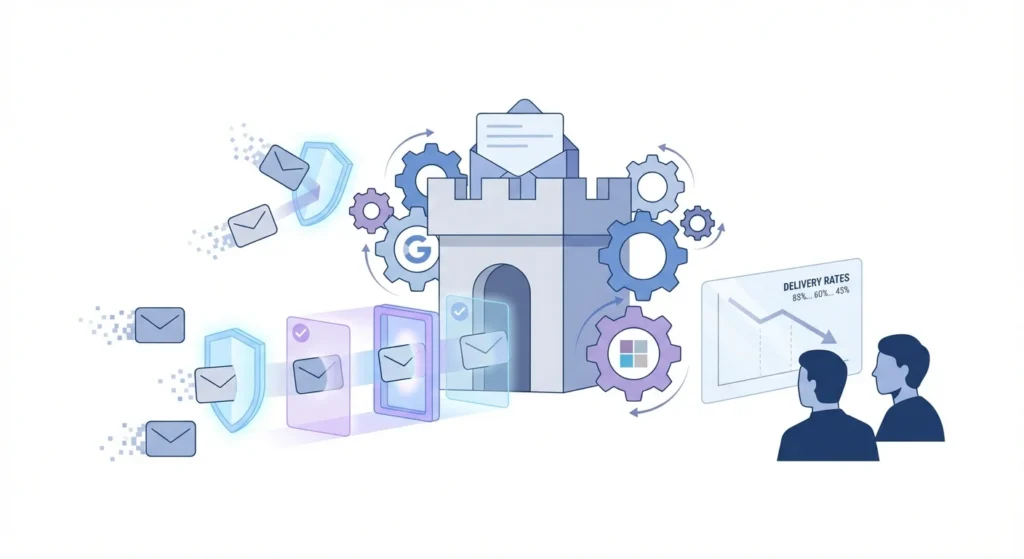
Gmail and Outlook don’t have to deliver your mail. Unlike the postal service, there’s no obligation. They are constantly evaluating signals, and those signals determine where your message lands, or whether it lands at all.
Are people opening your messages? Deleting them before reading? Are the inboxes you’re mailing still active? Is your infrastructure configured correctly? Do your subject lines and design look like something a real person would send? Every one of those factors feeds into a system that decides whether your mail lands in the inbox, the promotions tab, spam, or nowhere.
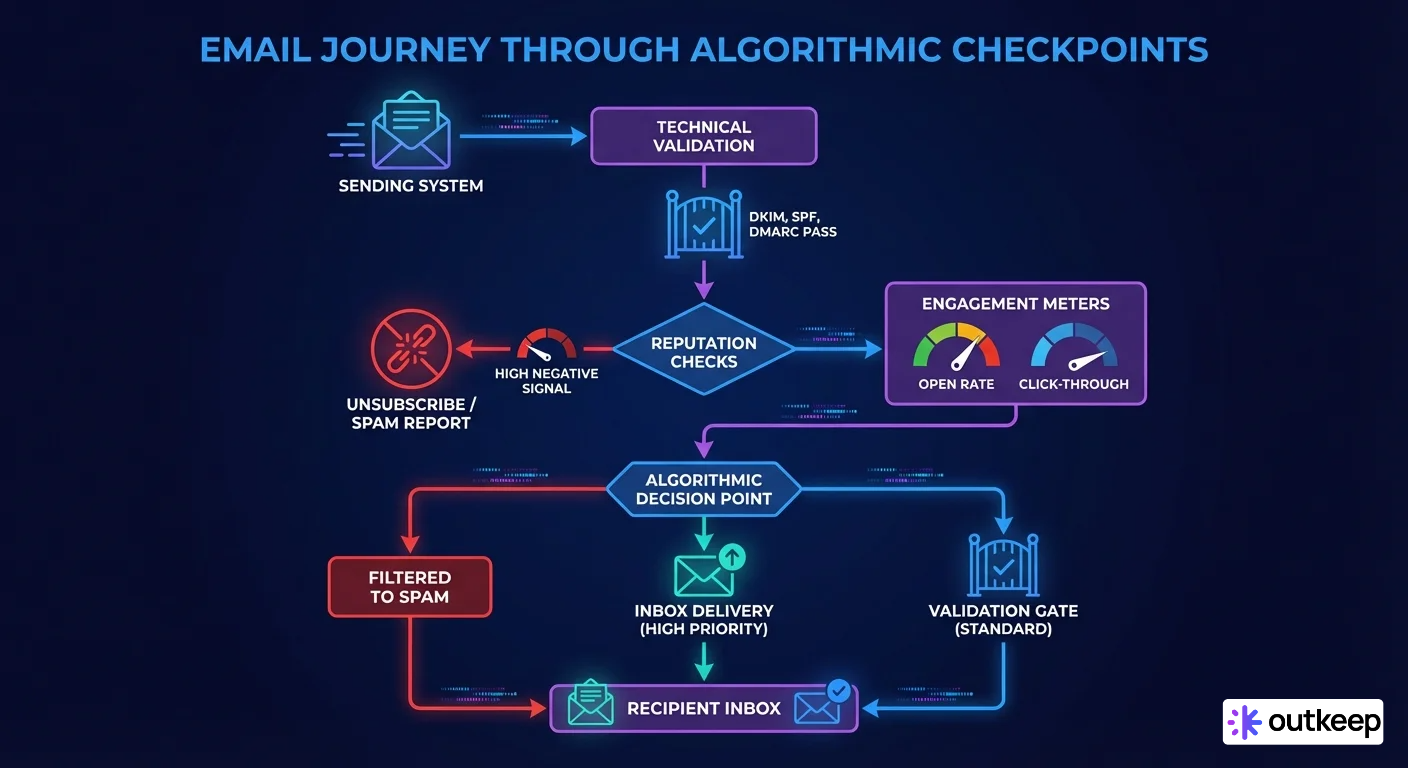
It’s an algorithm in exactly the same way LinkedIn’s feed is an algorithm. We just don’t talk about it that way, and that framing gap is costing people. Once you accept that email is an algorithmic environment, the right moves become obvious. You work with the system, build trust gradually, avoid sending to dead addresses, and treat shortcuts as a tax you pay later. That philosophy is baked into how Outkeep was built, guardrails that prevent you from hurting yourself aren’t a limitation, they’re the product.
What does good email messaging actually look like in 2026?
Most companies are at what George calls stage zero. They run four to six week campaigns, test a message, don’t see instant results, and move on before they have any real signal. That’s a patience problem.
The teams that get it right start by building a real messaging platform: a clear sense of their audience, what they want to be known for, tone of voice guidelines, and a handful of core offers they are willing to test over time. From there, they shift to always-on execution rather than campaigns with a finish line.
The best performing approach right now is peer-to-peer messaging. Credible people inside your company writing emails that look and feel like something a real expert would send to a peer. Less “download our ebook,” more “I saw something this week that’s relevant to what you’re working on.” The goal of any individual email is simple: earn a click, or better yet, a reply. Not a sale. A click.
Where does AI fit in, and where does it go wrong?
The irony of AI-generated email is that it’s made genuine communication easier to stand out. When everyone’s personalization line reads like a template, the homogeneity becomes its own tell.
When the 30th pitch you receive says “I love that your content goes beyond generic fluff,” you know exactly what happened. AI can be useful in email, but it has to be trained on your actual voice: your tone guidelines, your messaging platform, real examples of how you communicate. Used as an assistant to sharpen ideas you already have, it works. Used as the engine that generates your positioning from scratch, it produces the same thing everyone else is producing.

The deeper risk is one worth saying plainly: the companies building the most sophisticated inbox filtering are the same companies building the leading AI models. If you are sending high-volume, AI-generated outreach into Gmail and Outlook at scale, those systems can almost certainly recognize the pattern. Writing human emails that actually respect the recipient is increasingly the competitive advantage.
What is the Bonfire and Fireworks framework?
Most B2B buying cycles are twelve to thirty-six months long. Most marketing campaigns are six to twelve weeks. That mismatch is where most pipeline quietly dies.
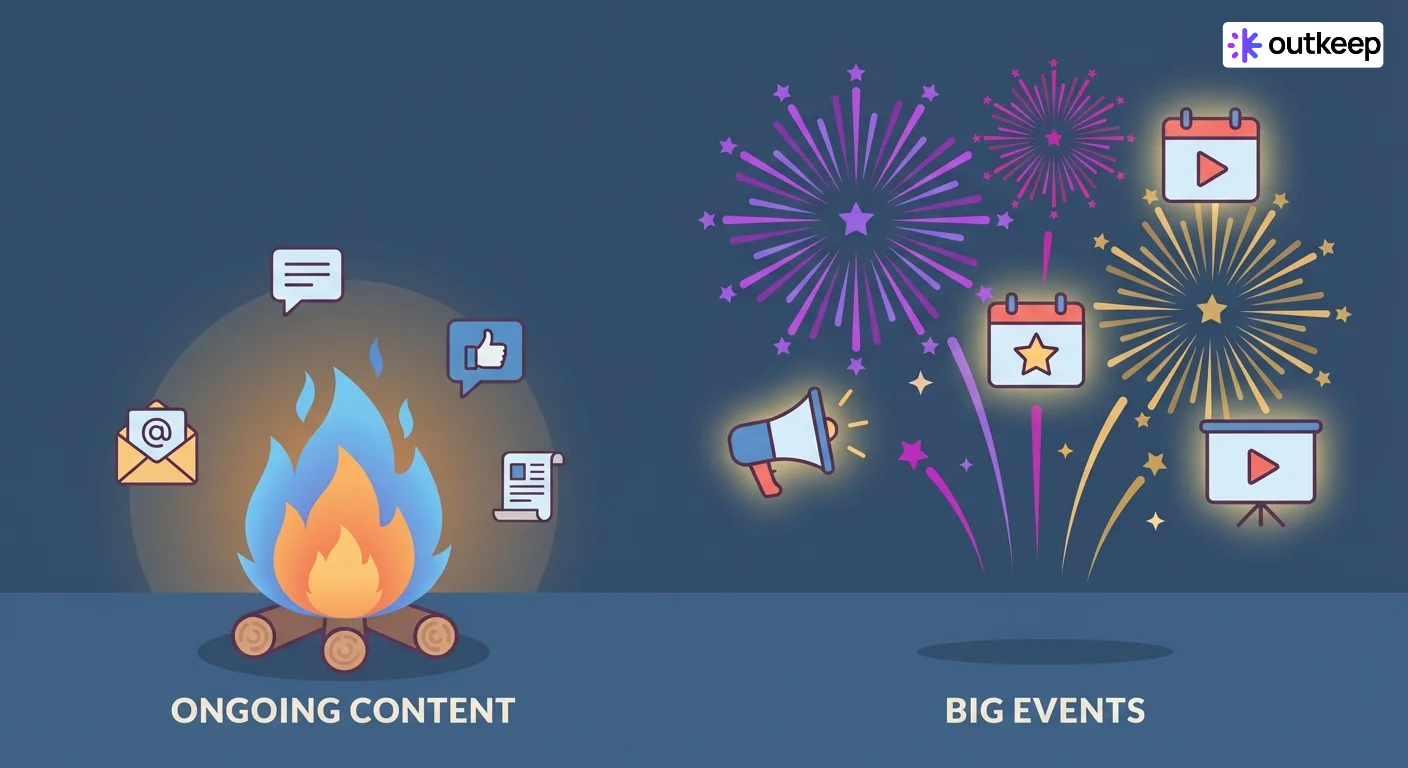
Bonfires are the high-frequency, low-duration touchpoints: emails, blog posts, social content, things that take under thirty seconds to consume and that your audience sees dozens of times a month. Fireworks are the high-investment, high-credibility moments: podcasts, webinars, live events, anything thirty minutes or longer where someone is genuinely showing up.
The key principle is perpetuity. Whatever cadence you choose, you commit to it indefinitely. Forever. That consistency is what builds a real audience and makes sure you’re the name someone thinks of when a buying cycle finally opens. Become famous in your world. That requires the discipline most marketers give up on too soon.
The full episode is genuinely worth an hour of your time.
George goes deep on contact data and intent signals, the right way to think about follow-up cadence, and one of the more interesting points in the whole conversation: why the quietest people on your list are often your best future customers. Find it on the Wantrepreneur to Entrepreneur podcast.