Most B2B marketing teams have made peace with algorithms. They accept that SEO has rules, that social platforms have models, that paid channels score their ads. They test, iterate, and work with those systems rather than against them.
Then they open their email platform and the mindset completely shifts. Gmail becomes something to outsmart. Inbox providers become adversaries. And execution drifts toward gimmicks, volume plays, and workarounds that feel like strategy but function like debt.
The irony is that email runs on the same fundamental logic as every other algorithmic channel. It rewards relevance and trust. It punishes friction and abuse. It responds to behavior over time. The only thing that’s different is the framing, and that framing is costing otherwise sophisticated teams real performance.
TL;DR
- Inbox providers are intermediaries, not adversaries. Work with them the same way you work with SEO, social, and paid algorithms.
- The technical foundation (SPF, DKIM, DMARC, subdomains, IP decisions) is load-bearing. You cannot skip it and expect performance.
- Volume has to be earned gradually, exactly like rankings in SEO.
- Paid channels score your ads for quality and relevance. Inbox providers do the same thing to your email.
- Engagement signals drive placement. Spam complaints and hard bounces are serious, not rounding errors.
- Cadence and consistency improve both user experience and algorithmic trust at the same time.
- Each email gets fewer swings than a social post. Treat it accordingly.
- Unengaged contacts are a liability. Sunset them the same way sales walks away after eight unanswered touches.
What is an email deliverability strategy?
Inbox providers are not adversaries. They are intermediaries, the same kind sitting between you and your audience in every other channel you manage.
Google’s algorithm protects search users. Social algorithms protect platform quality. Ad quality scores protect users from manipulation. Gmail’s filtering system protects Gmail users from spam and phishing.
Once you accept that frame, a lot of deliverability anxiety dissolves. You stop asking “how do I get around the filter” and start asking “how do I make the filter’s job easy.” Those questions lead to very different strategies, and one of them actually works long-term.
What the algorithm rewards:
- Wanted and expected email
- Relevance to the recipient
- Safety and trust signals over time
- Predictable sending behavior that looks stable
Operator moves:
- Drop the “us versus the inbox providers” framing and replace it with “work with the intermediary.”
- Optimize for making the provider’s job easy, because their job is user safety and user experience.
- Treat shortcuts as a tax you pay later, usually in placement and reputation.
What technical setup does deliverability require?
SEO taught us that you cannot earn rankings without getting the technical foundation right first. Email has an identical layer, and teams skip it constantly.
SPF, DKIM, and DMARC are your authentication stack. They tell inbox providers you are authorized to send on behalf of your domain. Without them, you are a sender with no credentials asking to be trusted anyway. Providers will not extend that trust at scale.
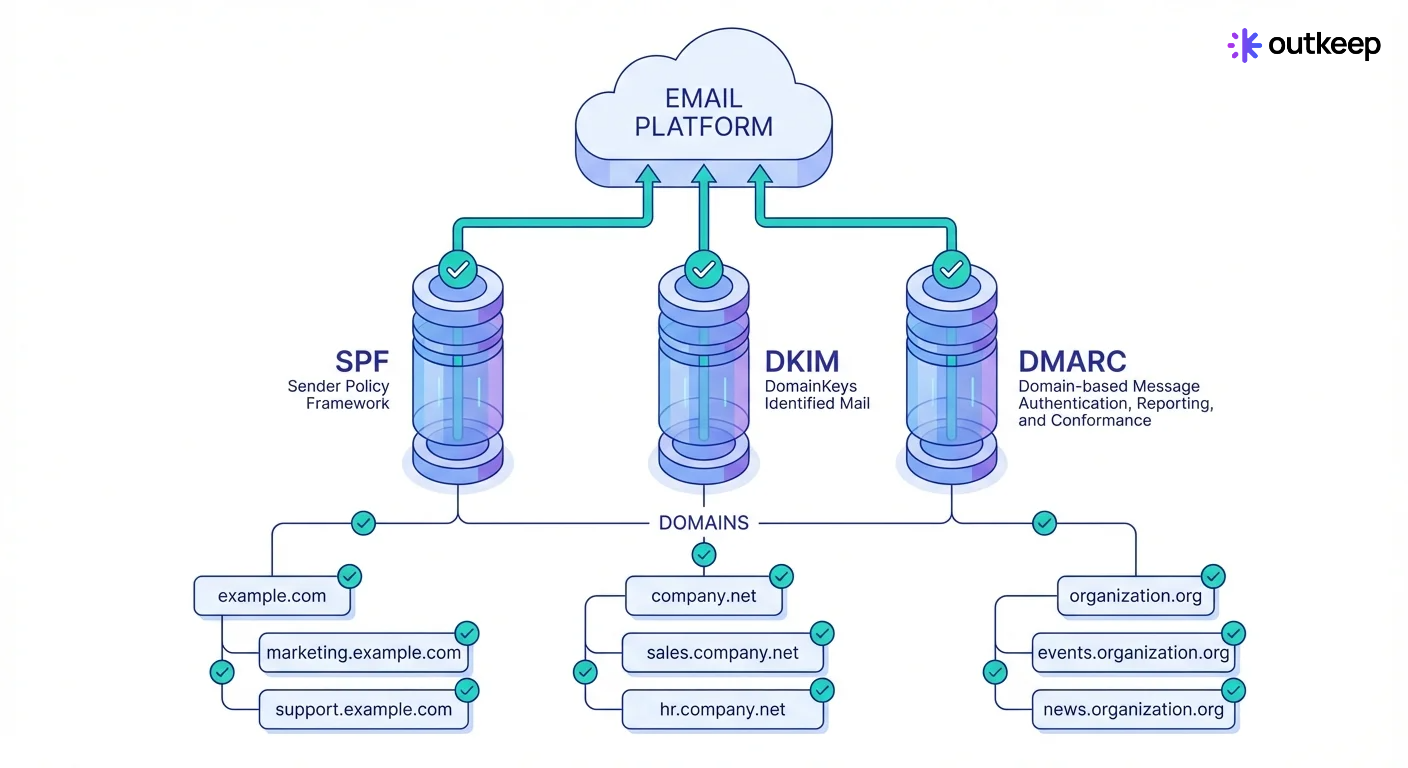
Subdomains let you build separate reputations for separate use cases. Your marketing mail and transactional mail should not share the same sending identity. One bad campaign should not torch your transactional deliverability. Separating them gives you control over what goes wrong and where.
Shared versus dedicated IPs is a decision with real stakes. A shared IP pool is a multi-tenant building. If another tenant burns it down, you are affected regardless of your own behavior. A dedicated IP gives you control over your reputation, and full responsibility for it. Neither is automatically better, but the decision should be deliberate.
And volume cannot be forced. Even with a pristine list, you cannot go from zero to high volume without a ramp. Inbox providers need to see that your sending is safe, relevant, and predictable before they extend broad placement. Exactly like a new website not ranking for high-volume keywords on day one.
What the algorithm rewards:
- Authenticated sending (SPF, DKIM, DMARC)
- Clear separation of sending use cases via subdomains
- Stable infrastructure that builds reputation over time
- Gradual volume increases that look controlled
Operator moves:
- Use subdomains to separate different mail streams so one use case does not contaminate another.
- Make an explicit decision on shared versus dedicated sending IPs based on your volume and control needs.
- Treat technical setup as ongoing operations, not a one-time checklist item.
- Start with smaller, cleaner segments that you expect will engage, then scale only when earlier sends produce healthy engagement.
How does the engagement layer work?
Once your technical foundation is right and you have ramped responsibly, email behaves like an engagement-based algorithm. Inbox providers watch opens, clicks, replies, spam complaints, hard bounces, and unsubscribes.
If you think about how social algorithms work, this should feel familiar. Engagement velocity matters. Who engages likely matters, not just how many. High-activity recipients probably carry more signal weight than dormant accounts. The algorithm is not just counting interactions, it is assessing quality.

Negative signals deserve extra attention because teams consistently underweight them. Spam complaints are a serious problem, not a rounding error. Hard bounces are a serious problem. And hiding your unsubscribe link is one of the most self-defeating things a sender can do. You are trading a clean opt-out for a spam complaint, which is a far worse signal. Making it easy to leave is a reputation management decision, not just an ethical one.
What the algorithm rewards:
- Opens, clicks, and replies
- Low spam complaints and hard bounces
- Clean unsubscribes (both header-level and in-body)
- Engagement from active, important accounts
Operator moves:
- Put spam complaints and hard bounces in the “non-negotiable” category.
- Track unsubscribes honestly and make them easy.
- Assume weighting is not uniform. Who engages matters, not just how many.
- Implement an activation and consent process that respects users and mailboxes from the start.
How often should you send?
Every channel has frequency norms, and violating them has consequences. In B2B email, the norms are more conservative than social, typically once a week, twice a week, or every two weeks depending on your audience and the value you are delivering.
Push too hard and you burn trust and drive complaints. Pull back too far and your list decays. People forget who you are, addresses go stale, and your next send looks more like cold outreach than a message from someone they opted in to hear from.
Consistency is one of the most underrated levers in email. Sending on the same day and time every week does two things at once. For your audience, you become expected. For the inbox provider, you look like a stable, predictable sender whose patterns are safe. That stability is itself a positive signal.
It also keeps list hygiene manageable. If you disappear for six months and resurface with a large send, your bounce rate will spike because addresses have gone bad silently. A steady cadence catches those changes incrementally and keeps your signal health in a good band.
What the algorithm rewards:
- Cadence that matches audience expectations
- Consistency in timing and volume
- Low “surprise factor” for both users and providers
- Predictable patterns that reduce risk signals
Operator moves:
- Pick a cadence you can sustain without creating friction, then stick to it.
- Send on a consistent day and time so users anticipate you and providers see stable patterns.
- Do not disappear for long stretches and then reappear with a big send.
- Use consistency to keep list hygiene in a healthy band.
Does creative quality affect deliverability?
B2B teams agonize over LinkedIn posts, debate ad creative for days, run full reviews on landing pages, then treat email like a production line. That is backwards.
In social, a post that underperforms costs you almost nothing. You post again tomorrow. In email, you get fewer swings. A poorly thought-out send reduces the effectiveness of everything that comes after it, because reputation and engagement signals accumulate over time.
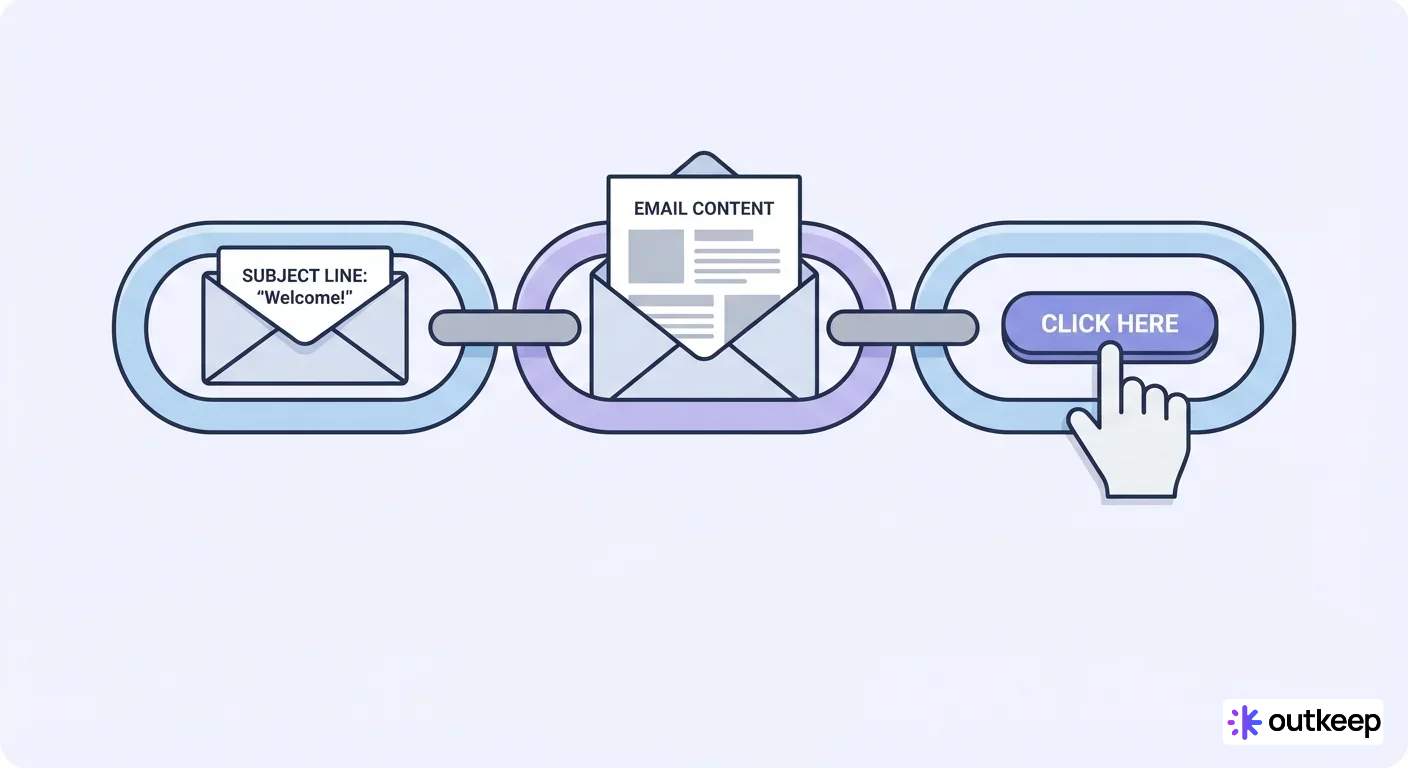
The frame I find most useful: every email is a chain of micro-decisions leading to one macro-decision, “I’m going to click.” The subject line and preheader earn the open. The body provides context that makes the click feel natural. The landing page delivers on the promise the email implied. Break that chain anywhere and you erode trust with both the recipient and the algorithm.
Design matters here too. Heavily designed emails, lots of images, lots of links, do not match the pattern of messages real people send to real people. In B2B, lean emails that drive to a single click, with the content load carried by the landing page, tend to perform better and age better.
One more thing on AI-generated content: the companies building the most sophisticated inbox filtering are the same companies building the leading AI models. If you are using AI to generate high-volume, thinly personalized outreach into Gmail and Outlook at scale, assume those systems can recognize the pattern. Thoughtful, human-written emails will outperform clever mass personalization over time, especially as detection improves.
What the algorithm rewards:
- Messages that earn the click without manipulation
- A clear path from subject line to landing experience
- “Normal” human-to-human patterns, especially in B2B
- Authentic content over machine-generated personalization
Operator moves:
- Build every message around the macro-decision: “I’m going to click.”
- Keep the promise chain intact from signup through click and landing experience.
- Avoid patterns that do not look like normal human email, especially image-heavy and link-heavy blasts.
- Default to thoughtful, human-written, respectful emails that stick to fundamentals.
What does a sunset policy look like?
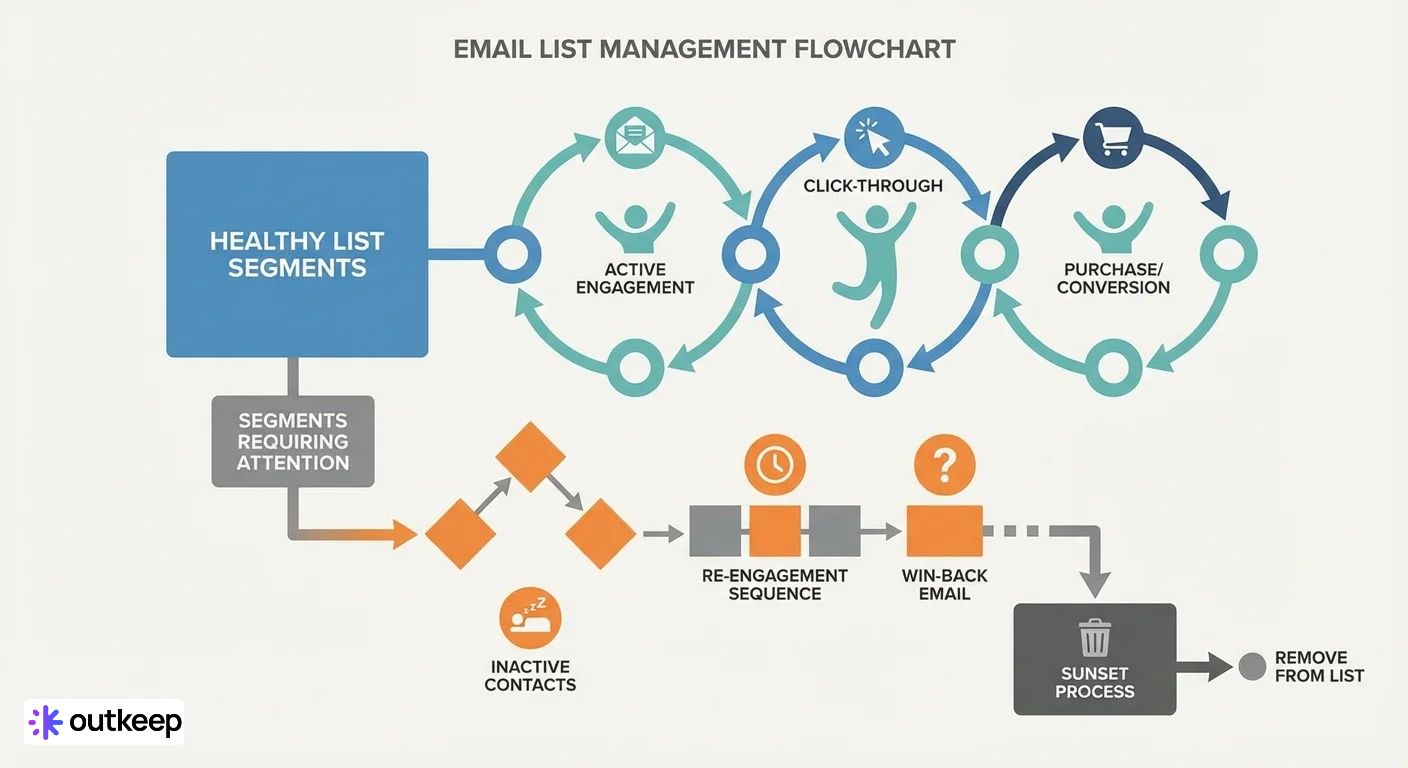
People should not live on your list forever just because you captured their address once. Keeping unengaged contacts is not neutral. Low engagement relative to your active file is a negative signal to inbox providers, and dead weight quietly erodes your standing.
Sales teams understand this intuitively. They walk away after seven or eight unanswered touches. Marketing should apply the same discipline. A clear sunset policy, where unengaged contacts move to a re-engagement sequence and get removed if they do not respond, protects the reputation of your entire program.
In B2B, this matters more than in B2C. Job changes are constant. A list that felt healthy eighteen months ago may have significant dead weight today, and you will not know until you send at scale and see the bounce rate spike.
What the algorithm rewards:
- Lists that reflect real, current audiences
- High relative engagement across the active file
- Low bounces from dead or invalid addresses
Operator moves:
- Operationalize a sunset policy and enforce it, especially in B2B where job changes are constant.
- Take the same stance sales already takes. Walk away after a reasonable number of unanswered touches.
- Keep an eye on automated personalization at scale, as providers can detect bot-like patterns.
- Maintain list quality as an ongoing discipline, not a quarterly cleanup.
Why this all comes back to one simple idea
Email remains the highest-ROI channel in B2B. You might spend five figures a month renting audiences on paid, with economics that look efficient in some markets and brutal in others. A well-run email program can nurture and monetize an owned audience for a fraction of that, with margins that almost nothing else matches.
That advantage is real, but it is not automatic. It only holds if you treat the channel with the same rigor you bring to SEO or paid. Get the technical setup right. Ramp thoughtfully. Obsess over relevance. Protect your reputation. Maintain your list.
At the end of every inbox is a real person who chose at some point to let you in. The algorithm is there to protect that person. Work with it, and you get preferential treatment. Fight it, and you pay a compounding tax on every send.
Treat email like the algorithmic environment it is, and it will keep outperforming almost everything else you do.
FAQ for Modern B2B Email Programs
What do SPF, DKIM, and DMARC actually do for deliverability? They are core authentication signals that help inbox providers confirm you are allowed to send on behalf of your domain. Getting them right is part of the technical floor for consistent inbox placement.
Should I use subdomains for different types of email? Often, yes. Subdomains can build separate reputations, which helps isolate different sending use cases so one stream does not drag down another.
Does a shared IP hurt deliverability compared to a dedicated IP? A shared IP can be fine, but it is a multi-tenant environment where other senders can affect the reputation of the pool. A dedicated IP gives you more control and makes you fully responsible for maintaining reputation.
Do unsubscribes hurt deliverability? Clean unsubscribes are generally preferable to spam complaints. Making unsubscribe easy reduces frustration and helps prevent recipients from using “report spam,” which is a stronger negative signal.
How fast can I scale sending volume on a new domain? You typically need to ramp gradually. Going from zero to high volume quickly can look risky, even with a good list, because providers want to see safe, relevant, predictable patterns first.
How often should a B2B company email its list? Common cadences are weekly, twice weekly, or every two weeks, depending on audience and value. The key is consistency and respecting cadence norms so you are expected, not a surprise.
Why do image-heavy emails sometimes underperform in B2B? They often do not resemble normal human-to-human email patterns and can look more promotional or spam-like. In B2B, simpler emails that drive to a clear click tend to be safer and clearer for recipients.