Intro
This is for senior B2B marketers who run marketing programs and need a practical way to build a content flywheel at any company size. It focuses on one workstream that sits underneath every channel: content, because without this content foundation, no channel really works. It uses the Bonfire and Fireworks framework to decide what to make, how often to ship, and how to keep it sustainable. You can read it end-to-end or use the sections as a checklist to tune an existing engine.
1. Treat content as the foundational workstream, not a side project
What this means
If you have not figured out the content workstream, it does not matter which channels you use. Your channels might run, but they will not perform consistently because they are missing fuel. This is the stage where you build the foundation that everything else depends on.
Why it matters
In most B2B environments, especially high-consideration and long sales cycles, the market needs repeated exposure to your thinking. If you only show up occasionally, you force every channel to work harder than it should. The result is usually uneven performance and a constant feeling that you need a new tactic.
Operator moves
- Treat content as a permanent operating motion, not an initiative.
- Put an owner on the content workstream, not just individual assets.
- Decide what “feeding the fire” means at your company, then protect it on the calendar.
2. Use Bonfire and Fireworks to right-size effort and expectations
What this means
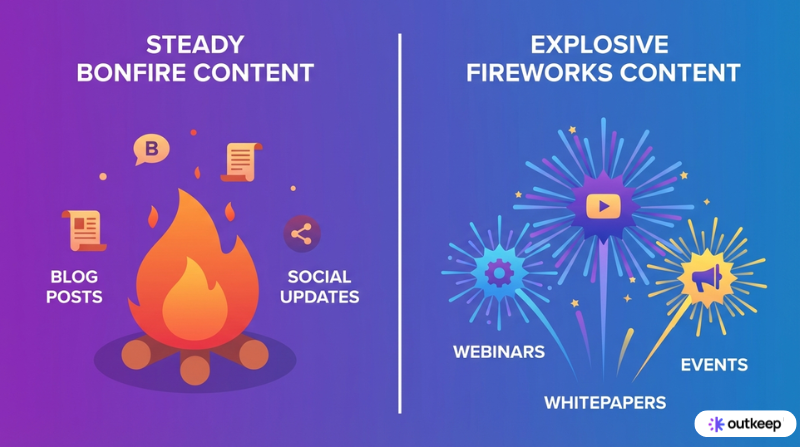
Bonfire content is anything you can spend three minutes or less on. It is always-on, low-friction, compounding output like blogs, social posts, short videos, and other small pieces you can publish in volume. Fireworks are higher-effort plays, usually around 30-minute interactions or equivalent work, like webinars, research reports and white papers, speaking, launches, and big partner programs.
Why it matters
Most companies overinvest in fireworks too early, or treat everything like a firework too early. That creates long lead times, internal bottlenecks, and fewer chances to learn what actually resonates. Bonfire first gives you a steady presence and a steady stream of signal.
Operator moves
- Define bonfire as “small enough to ship constantly,” not “small enough to be disposable.”
- Define fireworks as “big enough to deserve support,” not “big enough to stand alone.”
- Use bonfire performance as the signal for what is worth graduating into a firework.
3. Build the bonfire like a fire, because it starts as a candle
What this means
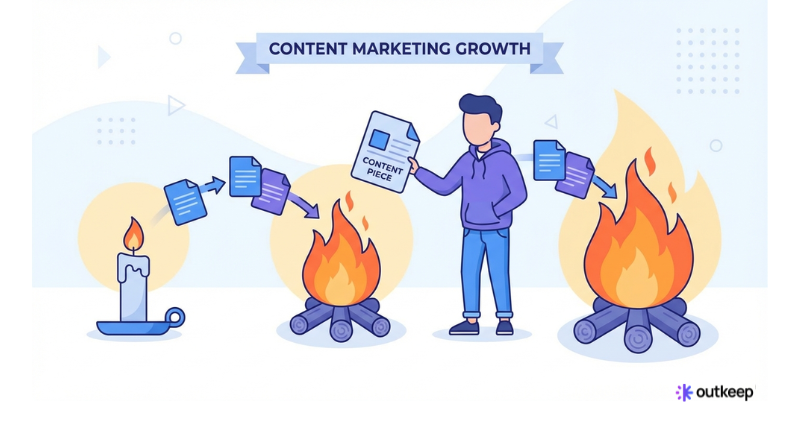
A bonfire starts as a candle. In the beginning it is hard to see, which is why people get impatient and jump to fireworks. The whole analogy is simple: you have to keep feeding the fire, constantly, or it goes out.
Why it matters
If you go quiet and stop feeding the fire, your presence deteriorates in weeks, not months. In B2B, “out of sight” becomes “not in the deal set” faster than teams expect. Fireworks attendance, event ROI, and pipeline response all get harder when the bonfire is not burning.
Operator moves
- Choose a cadence you can hit even when you are busy.
- Assume your market presence decays quickly when you stop publishing.
- Plan for continuity, because the hardest part is not starting, it is staying on.
4. Pick a cadence you can run in perpetuity (crawl, walk, run)
What this means
Once you adopt the framework, decide what volume you can create and how much you actually need to create. It depends on how visible you need to be, how many audiences you serve, and how much capacity you have. A practical way to start is crawl, walk, run:
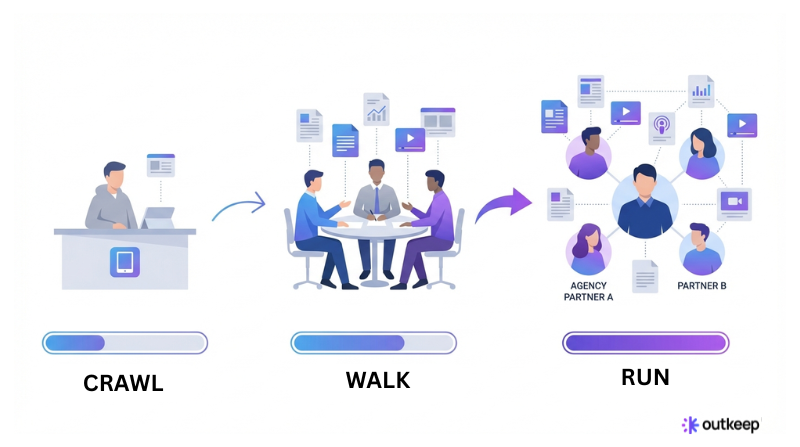
- Crawl: two blogs a month and one large asset every 45 days.
- Walk: a blog a week and one asset a month.
- Run: about six blogs a month and two assets a month (for example, a white paper and a webinar).
Why it matters
Consistency matters more than ambition. If you commit to one a week, doing the one a week is the job. Quality matters, but cadence is what keeps the fire lit and keeps the system predictable for the rest of the org.
Operator moves
- Choose the broadest audience you reasonably can, especially early.
- Map cadence by segment if you sell into multiple markets (financial services, healthcare, manufacturing), and be honest about what you can cover.
- Outsource components when needed, agencies can pick up parts of the workstream without owning the whole program.
5. Scale by segments and team capacity, not by wishful thinking
What this means
If you sell into multiple markets, you may need separate content workstreams for each. Crawl, walk, run can apply per segment, which means you might crawl for one segment first, then add the next as capacity grows. Team size and capacity matter, and you can adapt this approach to any team.
Why it matters
Segment sprawl is where content programs quietly die. Teams try to serve everyone at once, then miss cadence, then go quiet, and the fire goes out. Planning capacity up front prevents over-commitment and makes it easier to bring in help surgically.
Operator moves
- Use a simple starting heuristic from lived experience:
- 2–3 person marketing team: usually one segment.
- 3–5 people: usually 3–4 segments.
- 10–30 people: you can choose how many segments to cover.
- 30–40 person team in a major market: often 8–10 markets with a full bonfire and fireworks program.
- Add segments only after cadence is stable in the first segment.
- Decide what stays in-house (voice, expertise, editorial control) versus what can be supported externally (drafting, design, production).
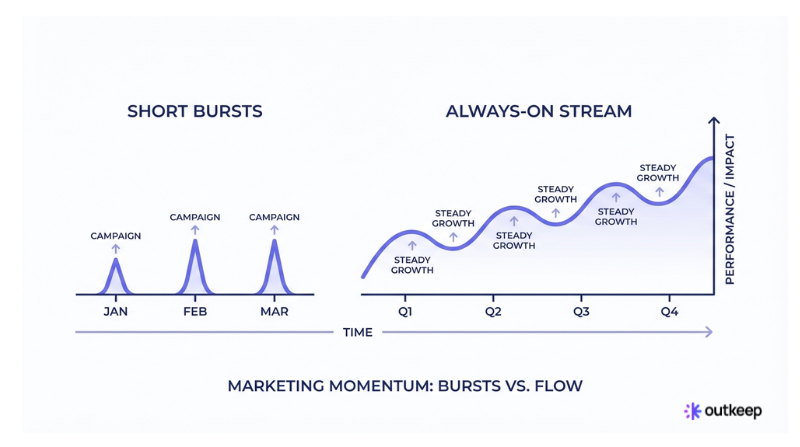
6. Treat the program as always-on, because “campaigns” are usually too short
What this means
In high-consideration, long sales cycle environments, 6-week or 3-month campaigns are usually too short to measure or understand. When teams shove an initiative into a time box, they struggle with measurement, attribution, and even defining what “worked.” In practice, a content program is an always-on campaign.
Why it matters
Time-boxing encourages the wrong behaviors: rushing production, over-weighting short-term metrics, and stopping right when repetition would start paying off. Always-on shifts you toward steady learning and compounding presence.
Operator moves
- Plan content like an operating system, not a launch plan.
- Set expectations internally that the program is on forever once you commit.
- Measure progress in a way that fits long cycles, and resist the urge to declare success or failure too early.
7. Avoid strict sequences and single-theme quarters, run multiple lanes
What this means
Strict sequences break. A 7-part series where each piece must go out in order almost guarantees you will hit a bottleneck, delay a part, and stall the entire sequence. It also fatigues the same internal expert, and the audience does not care about your sequence. They will see part 1 and part 5, then move on.
Quarterly “single-theme” plans create a similar bottleneck. If you decide, “This quarter we’re only talking about Offer A,” you usually end up harassing one executive or product owner all quarter, and the program bogs down.
Why it matters
A flywheel needs throughput. Dependency chains reduce throughput. They introduce friction, delays, and internal resentment, and they do not map to how people consume information in real life.
Operator moves
- Create content pillars that allow 3–4 concurrent workstreams.
- Keep 3–4 in-flight pieces at once, publish whichever is easiest to finish.
- Limit dependencies to what is truly required, usually one or two bonfire pieces to support a specific live event or webinar, not an entire quarter of chained output.

8. Build a “Mount Rushmore” bench, do not let it become a one-person show
What this means
Use a Mount Rushmore strategy: identify 3–5 core people (or more, depending on size) who consistently contribute ideas. They should share overarching themes but have different voices, perspectives, and business angles. Some will be visible on camera or on stage, some will not, and you can work around personality and format preferences.
Why it matters
If the program becomes a one-person show, it gets boring and it reduces the perceived enterprise value of the solution. Prospects and customers want to see the people behind the product: strategy leaders, operators, and hands-on experts. Mixing voices is more credible and more resilient operationally.
Operator moves
- Choose “faces” of the business deliberately, not just whoever is loudest.
- Match contributors to formats they can sustain (live, async, interview, written Q&A, short video).
- Design participation so it is easy to say yes, and hard to burn out.

9. Use partners to multiply reach and “borrow trust” without doubling effort
What this means
Work with the broader ecosystem: go-to-market partners, customers, associations, and independent influencers in your industry. The Nearbound, Who Economy idea applies directly to content. With content, 1 + 1 tends to equal 5 because you expand reach and credibility by being seen together.
You can also use partner content, including co-branded assets, when it provides real value to your audience.
Why it matters
Partnered content can extend distribution, diversify perspectives, and reduce internal production load. It also makes your brand more memorable because you are juxtaposed with brands people already know.
Operator moves
- Build a short list of “easy yes” partners for webinars, interviews, and co-authored pieces.
- Use guest speakers and underwriters to expand reach, even if they are not household names.
- Only co-brand content that you would be comfortable recommending even if your logo were not on it.
10. Make production and distribution boring, then let the market tell you what to scale
What this means
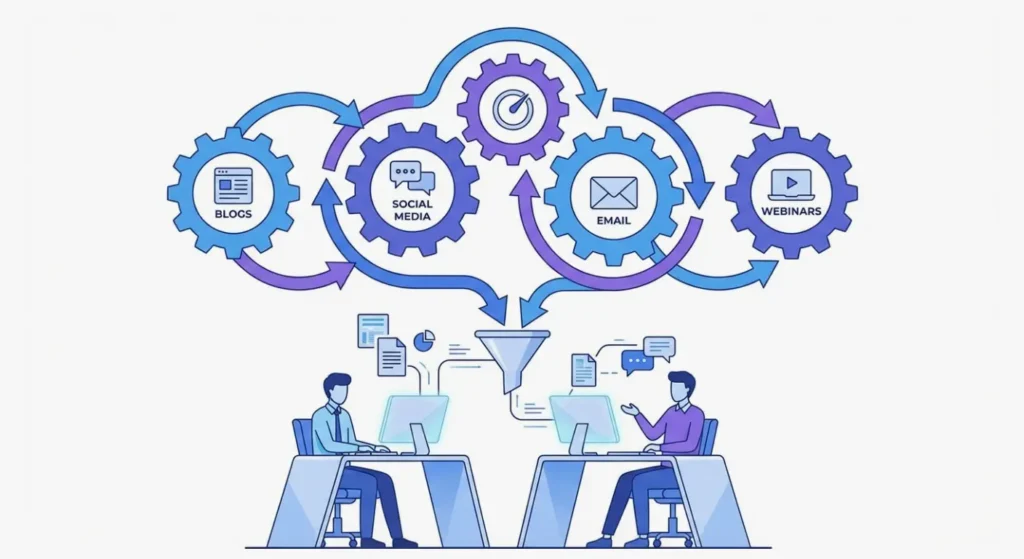
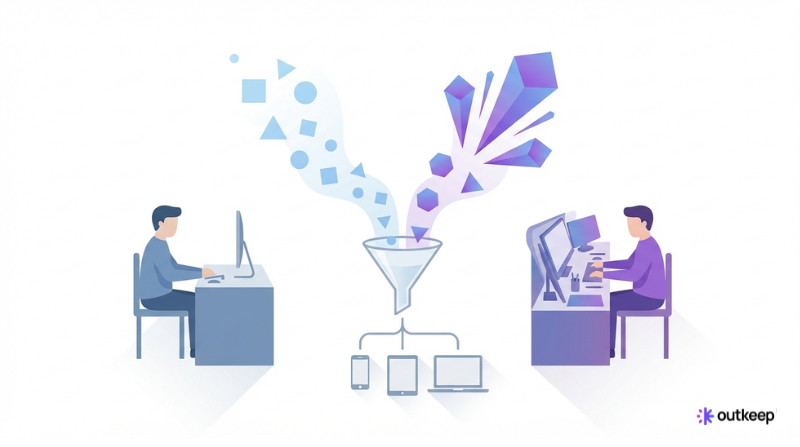
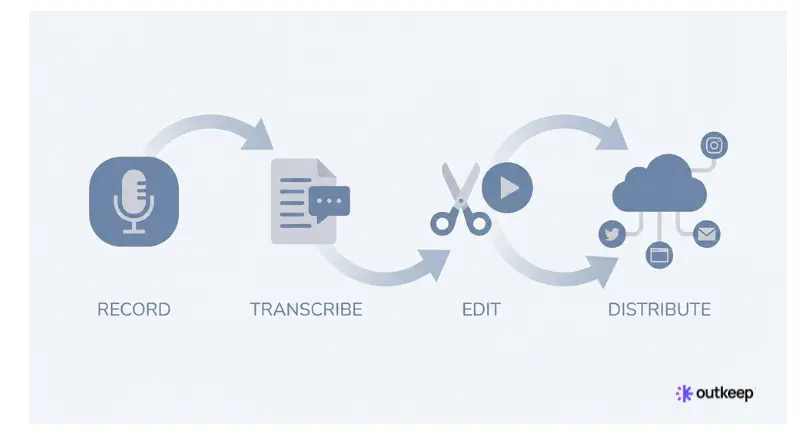
Your job is to make it as easy as possible for internal experts to participate and for the market to actually see the work. One of the best mechanisms is a content jam: meet for 30 minutes on a specific topic with a simple outline, talk it through, record it, transcribe it, then turn the transcript into modules across formats. The transcript removes the “what do I say?” problem, writing becomes editing rather than inventing.
Separately, do not create content unless you intend to promote it. Email is one of the most productive, cheapest channels for promotion. Do not rely only on SEO, it is a long-term play, and do not create content for robots. Create it for humans, then optimize.
Why it matters
A content engine needs two things: steady production and deliberate distribution. Without distribution, you are stockpiling assets. Without bonfire testing, you are guessing what deserves a firework. And without a helpful posture, you end up relying on hyperbole or manipulative tactics, which does not hold up in high-consideration environments.
Operator moves
- Run a repeatable workflow:
- Record conversations.
- Transcribe them.
- Highlight the strongest ideas.
- Break them into modules.
- Publish across blogs, email, social, and snippets.
- Borrow light structure from Agile (lowercase “a”):
- Weekly or bi-weekly cycles.
- A backlog of content ideas.
- Simple tickets through a standard workflow.
- Retrospectives to review what worked and what did not.
- SOPs so everyone knows the steps from idea to publish.
- Test broadly with bonfire, then graduate winners into fireworks.
- Do not gate often, only consider gating the highest-value assets, and even that is up for debate now.
- Use the bonfire to protect event ROI:
- If you spend $20,000 to attend a conference and meet 200 people, you still have 1,800 you did not meet.
- The incremental effort to keep them warm afterward is one-to-many leverage, but only if the bonfire exists.
Context on Outkeep’s Approach
Outkeep has perspective on this because we have run content and email programs across different team sizes and market scopes, including small teams that need lightweight systems and larger teams that need predictable operations. The Bonfire and Fireworks model reflects what tends to stay sustainable when you have to ship consistently, not just brainstorm well.
FAQ for Modern B2B Email Programs
1) What is the difference between bonfire content and fireworks content?
Bonfire is always-on, low-friction content you can produce in three minutes or less, like blogs, social posts, and short videos. Fireworks are higher-effort plays, often around 30-minute interactions, like webinars, research reports, launches, and speaking, supported by the bonfire.
2) How often should a B2B company publish content?
Start with a crawl, walk, run cadence you can sustain. For example, crawl can be two blogs a month plus one larger asset every 45 days, then increase only after you can hit cadence consistently.
3) Are time-boxed “campaigns” effective for long sales cycles?
Often they are too short to measure or understand in high-consideration environments. A content program tends to work better when treated as an always-on campaign that stays on once you commit.
4) Should we create a multi-part content series that must be consumed in order?
Strict sequences commonly break due to production bottlenecks and internal expert fatigue, and audiences rarely consume content in order. It is usually more reliable to publish standalone pieces across a few concurrent lanes.
5) Should we gate content to capture leads?
Gating tends to get in the way of helping, which is the point of the engine. If you gate, do it rarely, and only for the highest-value assets, recognizing that even that approach is increasingly debated.
6) Is SEO enough to distribute B2B content?
SEO is a long-term play. Most content needs deliberate promotion through channels like email, organic and paid social, and other distribution that matches your audience.
7) How do we get executives and internal experts to contribute without burning them out?
Use a bench approach (a Mount Rushmore of 3–5 contributors or more), vary formats to match preferences, and make participation easy through short recorded conversations that can be transcribed and edited into publishable modules.