Summer is the quietest stretch of the B2B year. School’s out, out-of-office replies pile up, the event calendar thins, and a lot of teams quietly downshift. Some stop marketing altogether, which is a mistake. You spend the rest of the year building momentum, and summer is exactly when you should be protecting it.
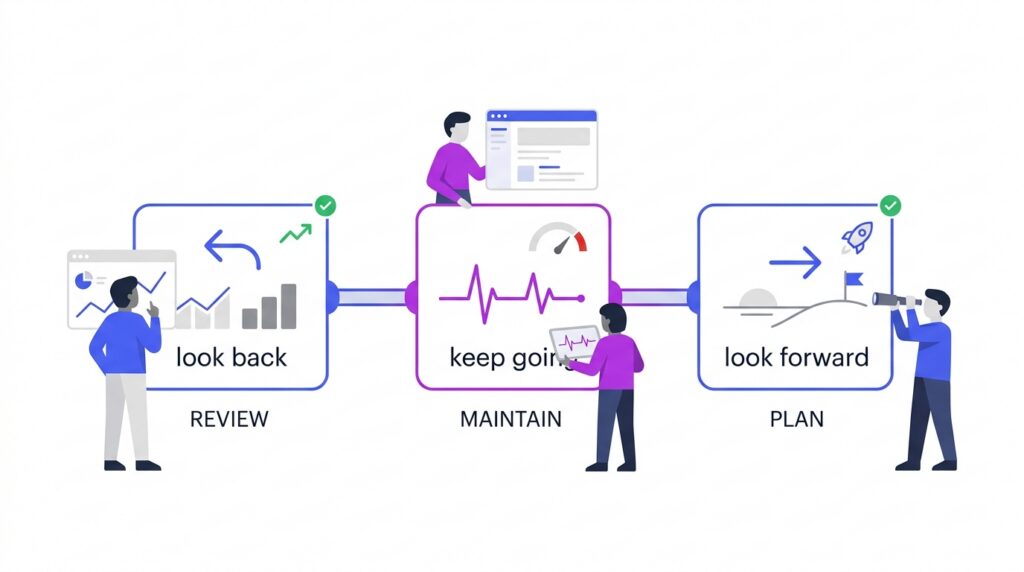
The boring advice is “summer cleaning” or “mid-year reset.” That’s not wrong, it’s just shallow. The version that actually compounds has three moves: look back at what the first half of the year already taught you, keep the engine running clean while everyone else coasts, and pre-load the fall so September doesn’t catch you flat. The look-back is the biggest of the three, and it’s the one teams skip most.
This is the playbook we run, and the one we’d run with a customer sitting at June 22nd staring down the slow months.
TL;DR
- Summer is the slow season in B2B. Use the lull as a structured reset, not an excuse to pause.
- Start with a buyer-journey retro on the deals that closed year-to-date. Walk them backwards and find the touches that actually mattered.
- The asset you filed as “awareness” was often the one that converted. Find it, then inventory your evergreen and pillar pieces.
- Do not pause your cadences. Plenty of professionals scroll LinkedIn and clear their inbox on vacation. Going dark just means restarting cold.
- Re-verify and re-segment your list now. In B2B, people change jobs constantly, and a stale list quietly degrades your numbers.
- Use the freed-up time to lock your fall event calendar, pre-load Q4 content, interview customers, and prep tests.
The playbook at a glance
The summer reset, in three moves.
One working session in late June or early July, then a checklist through August. Do them in order, the look-back feeds the other two.
Walk this year’s closed deals backwards. Find the touches and assets that actually moved revenue.
Hold cadences steady while everyone else coasts, and fix the foundation while it’s quiet.
Use the breathing room to set up your busiest months, mostly by redeploying what already works.
Order matters. Skip the look-back and you just scale the same mistakes into the fall.
1. Look back before you build anything new
The first half of the year already ran the experiment. Most teams never read the results.
Why it matters
Marketing has seasonality, and the quiet stretch is the right time to study what actually worked before you commit budget to the back half. Most teams get this backwards: they are always pumping out new content and new ideas, but they rarely do the retro. The look-back is where you find what to double down on and where to stop wasting money.
How to use it operationally
- Run a buyer-journey retro on deals that closed year-to-date. Walk each one backwards and map the touches you can decipher. Even at 10 or 12 deals a year, the small sample tells you something.
- Hunt for the catalyst. You will usually find a pattern: replies to the same article, a cluster of leads the week one ad ran, a single association placement or event that opened the relationship.
- Re-grade your assets. The piece you published as top-of-funnel awareness was often the thing that actually converted them at touch four. Look for the asset that did the heavy lifting, not the one you assumed did.
- Inventory what’s reusable. A webinar, a partner collaboration, a white paper that overperformed is a pillar piece or evergreen asset in disguise. Flag it for refresh, nurture, syndication, and paid.
Watch-outs
- Do not over-read a single touch. The catalyst is rarely one asset acting alone, it’s often repetition or position in the sequence. Chase correlation and causation honestly.
- You will only capture three or four of the touches in your system. Assume there were impressions you never saw and don’t treat the captured path as complete.
- The pretty creative loses all the time. I have seen a plain, Xerox-copy image of a hand beat every polished ad in the account on click-through. You rarely know in advance what’s doing the work, which is the entire reason to look.
2. Keep the engine running, and run it clean
Going dark in summer feels efficient. It just means you restart cold in September.
Why it matters
The instinct to pause cadences when people are out is understandable and usually wrong. You would be shocked how many professionals scroll their LinkedIn feed and keep up on news from a beach chair. Showing up in the feed and the inbox still matters. Summer is also the rare window to do the unglamorous housekeeping that compounds, the work that falls by the wayside the rest of the year because it’s mundane.
How to use it operationally
- Hold your cadences steady. Don’t increase, don’t go dark. You can adjust thresholds and budgets, and all-bound naturally shrinks because in-person events thin out, but keep email and ads on.
- Re-verify and re-segment the list. People change jobs constantly in B2B, so run validation software or use a vendor, clear the dead and decaying contacts, and re-match lists to ad campaigns. This is the maintenance item teams skip year after year, and it’s the one that bites them.
- Revisit your target account list. Should some of the top 50 or 200 fall out and be replaced? Summer is the time for that discussion.
- Tune the stack. Confirm the core infrastructure is green and healthy, cut software that isn’t serving you, and check that nothing weird happened (no domain on a bad list, no broken setup).
Watch-outs
- Garbage in, garbage out. Promoting great content to an old or dead list is how you stay very busy and very ineffective.
- A degrading list shows up as rising complaints and softening numbers before you connect it to TAM drift. Don’t wait for the warning signals.
- Build a real cadence for re-verification, ideally once a year. Bonus season is a natural trigger, since that’s when people move on.
Two ways to spend the slow season
The reflex vs. the play.
Most teams downshift or just pump out more content. The reset does the opposite, and compounds.
The reflex
Coast until September
Pause cadences, keep making new content, save the real work for fall.
What you get
The play
Reset while it’s quiet
Read your results, hold your cadences, clean the list, and pre-load the fall.
What you get
Don’t mistake busy for effective. New content aimed at a decayed list is motion, not progress.
3. Look forward and pre-load the fall
The slow weeks are the cheapest time you will ever buy to prepare for your busiest ones.
Why it matters
A look-back with no forward plan is just nostalgia. The same time that lets you run a retro lets you set up the back half of the year, when the calendar gets loud again and you won’t have the space to think.
How to use it operationally
- Lock your event strategy. If you sponsor or take speaking slots, you should be locked in by now, August 1st at the absolute latest. Events eat roughly half the budget, so make sure every lead you collect has a path to stay in your sphere until they’re in market.
- Pre-load September and October content. You don’t need much net-new. Your highest-performing evergreen and pillar pieces become the fall’s ad campaigns, email sends, nurture sequences, and syndication plays.
- Interview your customers. Many have more time in summer when their own travel slows. Capture ROI stories and what resonated, then roadmap that feedback into the second half.
- Schedule the tests you never had room for. A real Q3 or Q4 test takes creative time and thought, and summer is when you have the mind space to design it.
Watch-outs
- Don’t confuse “looking forward” with “making more stuff.” The universal complaint is teams that only ever create, never retro. New content on a stale audience is motion, not progress.
- Pre-loading only works if section one and two are done. Forward planning built on an unaudited list and unread results just scales the same mistakes.
Context on Outkeep’s Approach
Outkeep is built around long-lived, owned-channel programs, which means we live in the details of list hygiene, sending reputation, and cadence consistency the rest of the year, not just in summer. The look-back and the housekeeping are the two pitfalls we see teams skip most, and both have ripple effects that show up months later as a degraded list and wasted spend.
We think about this the way developers think about desire paths. You assumed buyers would take the sidewalk, but they cut across the field. The summer reset is when you find where they’re actually walking and pave it.
FAQ for Modern B2B Email Programs
Should we pause email and ad campaigns over the summer?
No. Hold your cadences steady. Plenty of buyers stay in their feed and inbox on vacation, and going dark just means restarting cold and losing repetition in September. Adjust thresholds and budgets if you need to, but stay on.
What is a buyer-journey retro?
You take the deals that closed year-to-date and walk each one backwards, mapping the touches captured in your system. The goal is to find the channels, assets, and events that actually moved the relationship forward, then double down on them.
Our sample size is tiny. Is a retro still worth it?
Yes. Even at 10 or 12 deals a year, you usually find something specific: multiple buyers replying to the same article, or a cluster of leads tied to one ad or event. Small samples feel anecdotal but still surface patterns worth acting on.
Why re-verify the list in summer specifically?
B2B contacts change jobs constantly, and a list you cleaned six months ago has likely decayed. Summer gives you the slack to run validation, clear dead contacts, and re-match lists before the busy season. Make it a yearly cadence, often tied to bonus-season churn.
How much new content do we need for the fall?
Less than you think. Your highest-performing evergreen and pillar pieces from the first half should become the back half’s ad campaigns, nurture sequences, and syndication. Refresh and redeploy before you create from scratch.
When should our fall event strategy be locked?
By now, ideally, and August 1st at the absolute latest. Events often consume around half the marketing budget, so secure sponsorships and speaking slots early and make sure every lead has a path to stay engaged until they’re in market.