By George Linville, CEO & Co-Founder, Outkeep · Updated November 2026 · Pricing and product details checked October 20, 2026
The short answer
The leading account-based marketing platforms in 2026 are 6sense, Demandbase, and ZoomInfo, which each announced being named a Leader in Gartner’s 2026 Magic Quadrant for ABM platforms. HubSpot, Outkeep, AdRoll ABM (formerly RollWorks), N.Rich, Metadata, Influ2, Madison Logic, and DemandScience (formerly Terminus) cover more specific needs and budgets. The biggest difference between them is what they’re built around: finding in-market accounts, reaching them with ads, or reaching the inboxes of the people on the buying committee.
- Enterprise intent data and orchestration: 6sense or Demandbase
- ABM built on a large contact database: ZoomInfo
- ABM inside the CRM you already use: HubSpot
- An email-first ABM platform for reaching buying committees: Outkeep
- Account-based advertising for mid-market teams: AdRoll ABM or N.Rich
- Ads aimed at named people: Influ2 or Metadata
- Managed programs and content syndication: Madison Logic or DemandScience
How we chose these: We compared platforms on what they’re built around, how they reach the people on a buying committee, what they cost in the first year, and how long they take to deliver value, using vendor documentation and pricing pages, Gartner announcements, Vendr purchase data, and practitioner reviews checked in October 2026. Platforms are grouped by approach rather than ranked. We left out Mutiny, which now positions itself as an AI sales assistant, and data providers such as Bombora that feed these platforms. Outkeep is our product.
In this guide: Which ABM platforms send email? · Signals, ads, or inbox · At a glance · First-year cost · The 11 platforms · 6sense vs. Demandbase · FAQ
Which ABM platforms send email to the buying committee?
Few send it themselves. Most identify the people at target accounts and hand them to sales tools or to your marketing automation platform. 6sense adds AI email agents for one-to-one outreach, ZoomInfo runs email sequences through sales tools, DemandScience emails its own audience on your behalf rather than your buying committee, HubSpot sends marketing email to opted-in contacts and lets reps email prospects one-to-one, and Outkeep sends recurring email to the buying committee at your target accounts.
That matters because email is the channel ABM teams use most. In Demand Gen Report’s 2025 ABM benchmark survey, 92% of ABM practitioners said they use email to engage target accounts, compared with 72% for in-person events, 59% for account-based advertising, and 56% for outbound calling (Demand Gen Report). And the people to reach are many: Forrester puts the typical B2B purchase at 13 internal stakeholders plus nine outside influencers (Forrester, 2026). Many of them haven’t opted in to your marketing email, so marketing email from a typical platform reaches only part of the committee.
How ABM teams engage target accounts
Share of ABM practitioners using each channel to engage target accounts. Source: Demand Gen Report, 2025 ABM benchmark survey.
The same survey found only 22% of ABM teams use a dedicated ABM platform, while 34% run ABM on the CRM and marketing automation they already have.
Signals, ads, or inbox: how ABM platforms differ
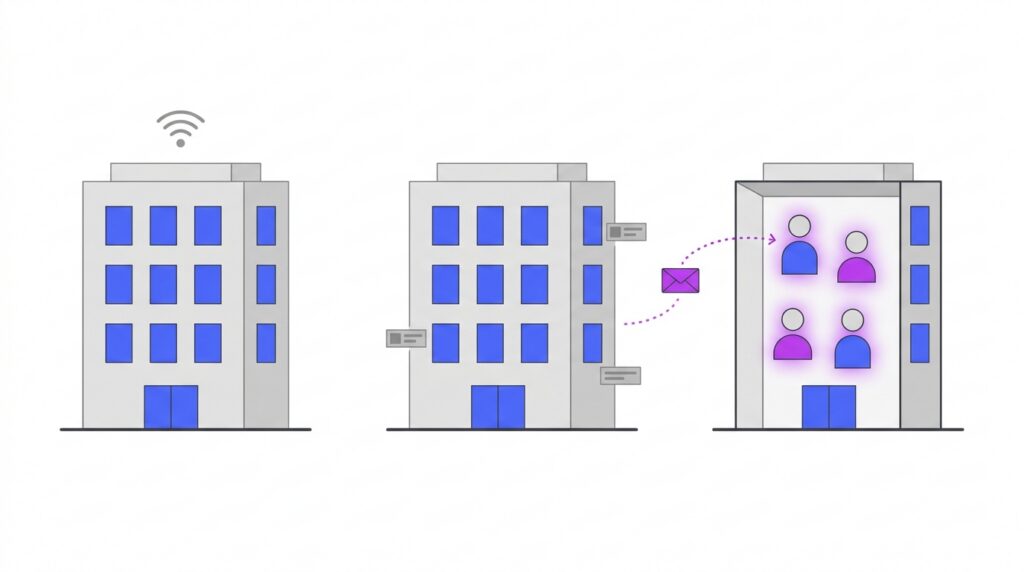
Most ABM platforms touch every part of the workflow. What separates them is which part they’re built around: finding the accounts that are in market, getting in front of those accounts, or getting your content into the inboxes of the people on the buying committee.
Signals, ads, or inbox
What each ABM platform is built around
Built around knowing which accounts are in market, with intent data, predictive scoring, and contact data that feed ads and sales.
Platforms
Built around getting in front of target accounts through advertising, media, or content syndication.
Platforms
Inbox platforms send your content to the people on the buying committee, by email, over time.
Platforms
Each platform card below lists what else it covers. Madison Logic and DemandScience sit in Ads as media, syndication, and managed-program providers.
The best ABM platforms at a glance
ABM platforms at a glance
6sense
Best for
Enterprise intent and orchestration
Typical annual cost
~$62K median
Typical setup time
1–3 months
Demandbase
Best for
Enterprise ABM with its own ad platform
Typical annual cost
~$69K median
Typical setup time
Weeks to ~2 months
ZoomInfo
Best for
ABM built on contact data
Typical annual cost
Quote
Typical setup time
Weeks to months
HubSpot
Best for
ABM inside your existing CRM
Typical annual cost
From ~$10.7K plus $3K onboarding
Typical setup time
Days to weeks
Outkeep
Best for
Email to the buying committee
Typical annual cost
~$23K first year
Typical setup time
Days to weeks
AdRoll ABM
Best for
Mid-market account-based ads
Typical annual cost
~$12K–$50K plus media
Typical setup time
Weeks
N.Rich
Best for
Transparent pricing, EU-friendly
Typical annual cost
$35.5K or $57.2K plus media
Typical setup time
About 2 weeks
Metadata
Best for
Automated paid campaigns
Typical annual cost
~$56K median
Typical setup time
Weeks
Influ2
Best for
Ads to named people
Typical annual cost
Low five figures to $60K+
Typical setup time
Weeks
Madison Logic
Best for
Content syndication plus media
Typical annual cost
~$36K+ plus media (est.)
Typical setup time
Weeks
DemandScience
Best for
Managed programs, no license
Typical annual cost
Pay per program
Typical setup time
Days (vendor claim)
Medians from Vendr purchase data; other figures from vendor pricing pages or third-party estimates.
What does ABM cost in the first year?
Dedicated ABM platforms typically cost $35,000–$70,000 a year before media, with Vendr medians of about $62,000 for 6sense and $69,000 for Demandbase. Most teams add ABM to a CRM they already pay for, whether that’s HubSpot, Salesforce, Microsoft Dynamics, or another. Here’s roughly what common setups add in the first year, not counting your existing CRM costs or ad spend:
First-year cost added to your CRM
| Add to your CRM | Added cost, year one | Still missing |
|---|---|---|
| 6sense | ~$62K | Email beyond opted-in contacts, unless you add its email agents |
| Demandbase | ~$69K | Email beyond opted-in contacts, outside of sales tools |
| Outkeep | ~$23K | Third-party intent and programmatic ads |
| 6sense + Outkeep | ~$85K | Highest cost; most tools to run |
Your CRM and marketing automation licenses are a separate cost on top of these figures. Built-in ABM tools depend on your CRM: HubSpot’s require Marketing Hub Professional, from $890/mo plus $3,000 onboarding, and Salesforce’s Account Engagement starts at $1,250/mo on an annual contract. 6sense and Demandbase also usually need a separate media budget, often several thousand dollars a month, plus a RevOps or ABM owner. Reviewers frequently mention multi-year terms and renewal increases.
The 11 best ABM platforms in 2026
Grouped as Signals, Inbox, and Ads.
6sense
6sense is the best-known enterprise ABM platform. Its Signalverse combines intent data, website de-anonymization, and predictive models to show which accounts are in market and when, and it sells contact data through credits. It announced being named a Leader in Gartner’s 2026 ABM Magic Quadrant (6sense).
Also covers: its own ad platform and LinkedIn campaigns, sales alerts, and AI email agents (sold separately) that write and send emails from 6sense or reps’ inboxes.
- Built around: Signals
- Good fit if: You’re an enterprise or upper mid-market team with a RevOps function to run it.
- Trade-off: Reviewers cite intent scores that are hard to explain, admin load, and multi-year contracts.
- Price: Quote only; Vendr median about $62,000 a year, before ad spend (Vendr)
Demandbase
Demandbase pairs its own intent data with its own B2B ad platform for display, video, and connected TV, plus account-based website experiences. It announced being named a Gartner Leader in 2026 as well (MarTech Series). It doesn’t send marketing email itself: people surface in sales tools such as Outreach, Salesloft, and Gong Engage, and marketing email runs through your marketing automation platform.
Also covers: advertising across display, video, connected TV, and social; web personalization; contact data.
- Built around: Signals
- Good fit if: You want enterprise ABM with advertising built in, on Salesforce, with an owner to run it.
- Trade-off: Reviewers describe a learning curve of about two months and significant orchestration work.
- Price: Quote only; Vendr median about $69,000 a year (Vendr)
ZoomInfo
ZoomInfo’s marketing product, now listed as GTM Studio, layers ABM on ZoomInfo’s contact and company database and its own intent signals, and identifies individual visitors at visiting companies. ZoomInfo announced being named a Gartner Leader for ABM platforms in 2026 (VentureBeat).
Also covers: its own ad platform plus LinkedIn, Meta, Google, and connected TV; SDR routing; email sequences through sales tools.
- Built around: Signals
- Good fit if: You already rely on ZoomInfo data and want marketing and sales working from it.
- Trade-off: Reviewers frequently cite cost, data accuracy, and renewal terms.
- Price: Quote only; sold separately from ZoomInfo’s sales products
HubSpot Marketing Hub (ABM tools)
For teams already on HubSpot, its ABM tools are the fastest way to start: target account tiers, buying roles, ABM dashboards, and auto-built segments that feed marketing email, smart content, and ads. Marketing email is limited to contacts who opted in (HubSpot), while reps with Sales Hub seats can email prospects one-to-one through sequences, within send limits.
Also covers: Buyer Intent, which identifies visiting companies and surfaces new companies researching your category; LinkedIn company audiences; the CRM itself.
- Built around: Inbox (opted-in)
- Good fit if: HubSpot is your CRM and you want ABM without another contract.
- Trade-off: Lighter than dedicated platforms, and intent and enrichment run on credits.
- Price: Requires Professional or Enterprise; Professional from $890/mo plus $3,000 onboarding
Outkeep
Outkeep is a streamlined ABM platform built around email to the buying committee. It suits teams that can’t justify a $60,000 platform, or that bought one and still can’t reach the people at their target accounts with their content.
You choose the target accounts. Outkeep builds and verifies an audience of the buying committees at those accounts, introduces your company to each person once from your team’s real inboxes with an easy opt-out, then sends your emails, such as your newsletter or research, roughly weekly from a subdomain of your own domain. Most of those people haven’t opted in, so Outkeep operates under US CAN-SPAM rules, which is why it’s limited to US recipients. You write the emails. Outkeep handles the audience, sending, deliverability safeguards, and removing people who don’t engage, and the audience you build is yours.
Also covers: LinkedIn audiences built from the same contacts and website visitor identification, both newer features; account-level engagement signals. No third-party intent data or programmatic ads.
- Built around: Inbox (our product)
- Good fit if: You sell large contracts to buying committees and publish content worth sending.
- Trade-off: The audience builds over about 90 days, and you’ll need another tool if you want intent data or programmatic ads.
- Not a fit if: Your recipients are outside the US, or you sell low-ACV, high-velocity products.
- Price: $4,995 for the first 90 days, then $2,000/mo all-in, month to month
AdRoll ABM (formerly RollWorks)
RollWorks became AdRoll ABM in August 2025 and remains a common mid-market choice. It runs account-based ads across display, video, connected TV, and digital out-of-home, guided by Bombora and keyword intent. Support is the most-praised part of the product.
Also covers: intent signals, sales alerts, and priority account lists. No native ABM email.
- Built around: Ads
- Good fit if: You’re a mid-market team that wants account-based advertising without enterprise overhead.
- Trade-off: Reviewers cite renewal inflexibility and gaps in HubSpot and LinkedIn integration.
- Price: Packages by quote; third-party estimates of about $12,000–$50,000 a year plus media
N.Rich
N.Rich publishes its prices and carries a 4.7 G2 rating as of October 2026, the highest in this group. It moves ad spend toward target accounts through its own ad platform, LinkedIn audience sync, and Google Ads, and serves more than 250 go-to-market teams, with EU hosting.
Also covers: its own intent signals, identified website visitors, and sales alerts. Email isn’t a channel.
- Built around: Ads
- Good fit if: You want predictable pricing and account-based ads, especially in Europe.
- Trade-off: Requires a 12-month ad-spend commitment.
- Price: $35,520 or $57,240 a year, plus committed media (N.Rich)
Metadata
Metadata automates B2B paid campaigns across 12 channels, including LinkedIn, Meta, Google, Reddit, display, and connected TV, using its own B2B audience graph to reach named people at target accounts.
Also covers: intent connectors such as Bombora and G2, and account signals for sales. Email isn’t a channel.
- Built around: Ads
- Good fit if: Paid media is your main ABM channel and you want it automated.
- Trade-off: Can be hard to fit to specific workflows.
- Price: Quote only; Vendr median about $56,000 a year
Influ2
Influ2 aims ads at specific people rather than whole accounts, using your CRM contacts or uploaded lists, and reports person-level engagement back to your CRM. It’s popular with mid-market SaaS marketing teams.
Also covers: person-level engagement signals and a Salesloft integration for follow-up. No email channel.
- Built around: Ads
- Good fit if: You know who’s on the buying committee and want them to see your ads.
- Trade-off: Pricing scales with the number of people targeted.
- Price: Usage-based; estimates range from low five figures to $60,000+ a year
Madison Logic
Madison Logic combines account-based media with content syndication, reaching buyers through its publisher network and delivering the people who engage as leads. It partners with ZoomInfo for contact data.
Also covers: Bombora intent and first-party engagement data; display, LinkedIn, connected TV, and audio.
- Built around: Ads
- Good fit if: You want account-based media plus a steady flow of syndicated leads.
- Trade-off: Reviewers raise concerns about lead quality from syndication.
- Price: Quote only; competitor estimates around $36,000 a year plus media
DemandScience (formerly Terminus)
Terminus merged into DemandScience in late 2024, and the combined company now sells managed programs with no platform license. It runs programmatic and connected TV ads, content syndication, events, and email to its own audience on your behalf.
Also covers: its own buyer data and intent signals, visitor identification, and web personalization.
- Built around: Ads
- Good fit if: You’d rather buy ABM as a service than run a platform.
- Trade-off: You receive leads from its audience rather than a contact base you own.
- Price: Based on program spend; no subscription
Gartner’s 2026 Magic Quadrant for ABM platforms also evaluated NextRoll (AdRoll ABM), N.Rich, Influ2, and Madison Logic, according to vendor announcements.
6sense vs. Demandbase
Data: both use their own intent data. 6sense leans on predictive scoring and sells contact data through credits. Demandbase includes its own intent and offers contact data. Both can add Bombora intent through partnerships.
Advertising: both run their own B2B ad platforms. Both cover connected TV, and Demandbase is often chosen for advertising and account-based web experiences.
Email: 6sense offers AI email agents for one-to-one outreach. Demandbase routes people to sales tools and your marketing automation platform.
HubSpot: both integrate, but Demandbase’s sales “Take Action” feature isn’t available for HubSpot CRM, so HubSpot teams should check the specific workflows they need before buying either.
Cost and commitment: Vendr medians are about $62,000 for 6sense and $69,000 for Demandbase. Both usually need a dedicated owner and a separate ad budget, and reviewers report multi-year terms are common for both.
Which to choose: choose 6sense if predictive scoring, contact data, and sales tooling matter most. Choose Demandbase if advertising and web personalization matter most. If you run HubSpot, confirm the sales workflows you need, since Demandbase’s “Take Action” isn’t available for HubSpot CRM. Either way, plan for a media budget and someone to run it.
Do you need a dedicated ABM platform?
About a third of ABM teams run ABM on the CRM and marketing automation they already have. A dedicated signals or ads platform usually pays off when you have hundreds of target accounts, a real ad budget, and someone to run it. Many mid-market teams combine their CRM, a data tool such as Clay, LinkedIn ads, visitor identification, and a way to keep the buying committee engaged by email. Before signing a multi-year contract, check how the platform will reach the individual people at your target accounts.
Frequently asked questions
What is an ABM platform?
Software that helps B2B companies identify target accounts, see which are in market, and reach the people at those accounts through ads, sales outreach, and email.
What is the best ABM platform?
For enterprises, 6sense, Demandbase, or ZoomInfo. For HubSpot users, HubSpot’s ABM tools. For mid-market account-based ads, AdRoll ABM or N.Rich. For an email-first approach to the buying committee, Outkeep.
How much does an ABM platform cost?
Dedicated platforms commonly run $35,000–$70,000 a year before ad spend, implementation, and staff. Lighter platforms and CRM add-ons cost less.
Can ABM platforms send email?
Most hand people to sales tools or to your marketing automation platform, where opt-in rules usually apply to marketing email. 6sense offers AI email agents for one-to-one outreach, ZoomInfo runs sequences through sales tools, DemandScience emails its own audience, HubSpot emails opted-in contacts and lets reps email prospects one-to-one, and Outkeep sends recurring email to the buying committee at your target accounts.
Is ABM worth it for mid-market companies?
The strategy usually is, especially with large contracts and buying committees. Whether a dedicated platform is worth it depends on budget, ad spend, and team, and many mid-market teams get most of the value from lighter tools.
What happened to RollWorks and Terminus?
RollWorks became AdRoll ABM in August 2025. Terminus merged into DemandScience in late 2024 and is now sold mainly as managed programs.
Who are the Gartner ABM Magic Quadrant Leaders in 2026?
6sense, Demandbase, and ZoomInfo, according to the vendors’ announcements of the October 2026 report.
About the author
George Linville is CEO and Co-Founder of Outkeep. He has built B2B email programs since 2014, including audience and data operations at PayStream and Levvel, both through acquisition. He writes about deliverability, list building, and B2B marketing from Charlotte, NC.
Sources: vendor product documentation and pricing pages (October 2026); Demand Gen Report ABM Benchmark Survey (2025); Forrester; Vendr purchase data; vendor announcements of the 2026 Gartner Magic Quadrant for ABM platforms; G2 and practitioner reviews; third-party pricing estimates where vendors don’t publish prices.